Quick Facts
- The 5% Rule: A swimmer generally requires about 5% of their body mass in additional buoyancy to stay on the surface.
- Aeration Impact: In turbulent water, water density is halved, making high float foam essential for staying above aerated water in Class V rapids.
- Survival Statistics: Increasing vest flotation to 26 lbs can reduce the time a swimmer remains submerged by approximately 21.6 percent.
- The Comparison: The Astral Indus provides 22 lbs of buoyancy, while the industry-standard GreenJacket offers 16.5 lbs.
- Safety Factor: Flush drowning is a major risk on big rivers, contributing to 19 percent of recorded whitewater fatalities.
- Certification: For Class V kayaking safety gear, a USCG Type V classification is the baseline for professional-grade rescue equipment.
High float pfd use is critical for Class V kayaking because it provides the supplementary buoyancy needed to stay above aerated water and turbulent hydraulics. In high-volume rapids, air bubbles significantly reduce water density, which makes standard 16.5 lb vests less effective at keeping a paddler's head above the surface for breath and navigation.
The Physics of Buoyancy: Why 22 lbs Matters
When we talk about big water hydraulics, we are dealing with a mixture that is often more air than liquid. In the meat of a Class V rapid, the water is so heavily aerated that it loses its ability to support weight. This is where the standard vest often fails the paddler. We rely on the displacement of water to float, but if the water is 50% air, your volume of displacement needs to double to achieve the same lift.
Using a high float pfd changes the survival math in your favor. Research indicates that increasing PFD flotation from a standard 15 lbs to a high-volume 26 lbs can reduce the amount of time a swimmer spends submerged under whitewater by approximately 21.6%. That percentage represents the difference between taking a breath at the crest of a wave and being pulled into the dark water of a deep hole.
The risks of insufficient buoyancy are stark. Flush drowning, where a paddler aspirates water while being swept through continuous rapids, was the leading cause of death on Class III to Class V rivers, accounting for 19% of fatalities recorded in the American Whitewater Accident Database between 2000 and 2020. While the U.S. Coast Guard minimum requirement for adult flotation is 15.5 lbs, real-world Class V conditions demand more. Modern high-volume vests designed for commercial and expedition use typically offer between 22 and 34 lbs of buoyancy to ensure the paddler stays as high as possible in the water column.
Anatomy of a Class V Whitewater Rescue Vest
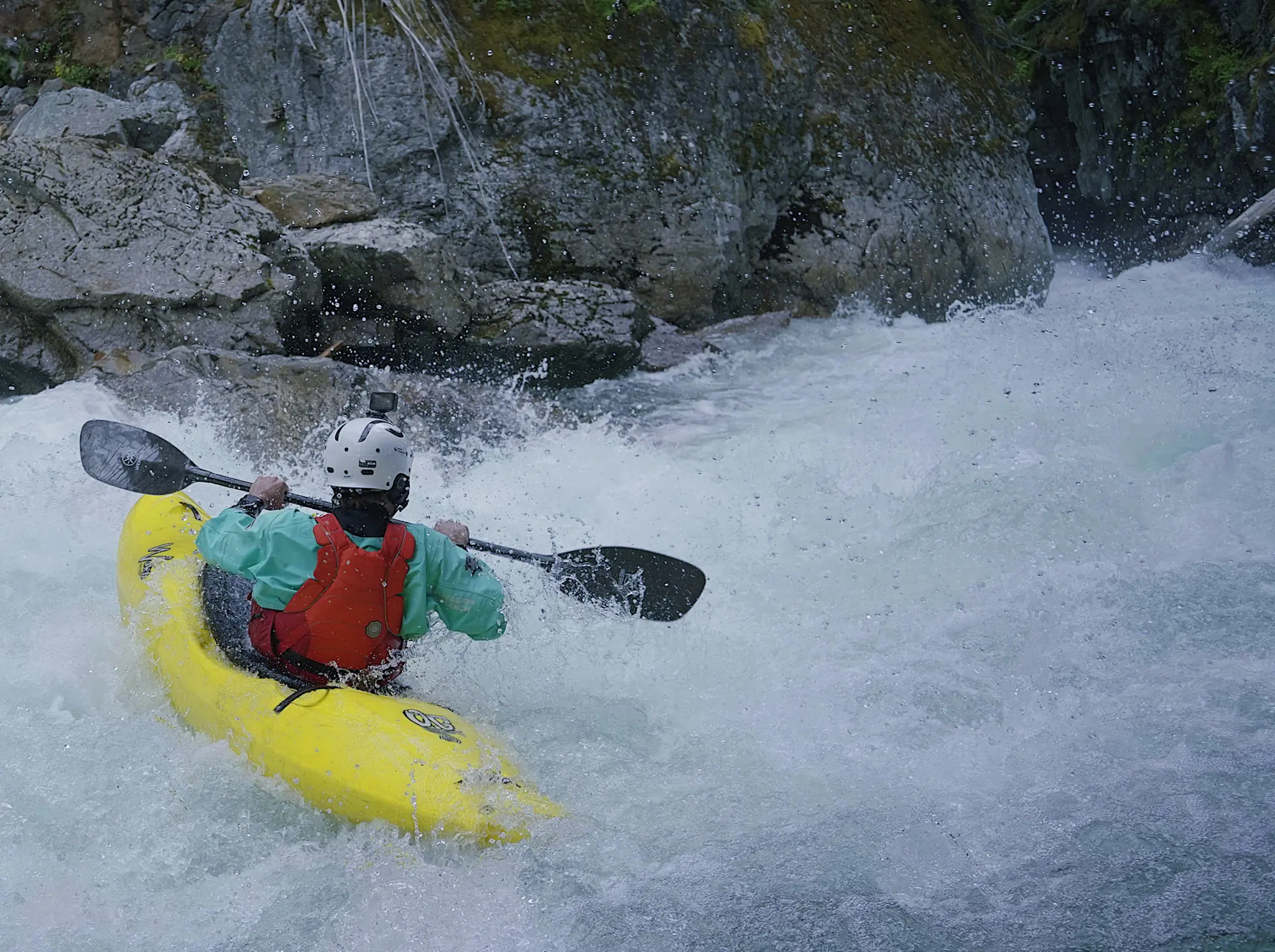
A legitimate whitewater rescue vest is more than just a life jacket; it is a piece of technical safety equipment designed to function under extreme stress. When we evaluate gear for expedition river running, we look for three primary design pillars: durability, utility, and the Clean Line Principle.
The construction usually involves a high-denier Cordura shell to withstand the abrasion of rocky swims and portages. Inside, advanced manufacturers use Gaia PVC-free foam. Unlike cheaper foams, Gaia is soft and organic-feeling, allowing it to mold to the paddler's torso. This facilitates a rib-locking fit that prevents the vest from riding up toward your chin when you are vertical in a hydraulic.
The Clean Line Principle Checklist
To ensure safety in snag-heavy environments or during a rescue, your vest should adhere to these standards:
- Recessed buckles: All hardware should be shielded by foam or fabric to prevent snagging on branches or flip-lines.
- Low-profile tool sleeves: Essential gear like folding knives should be tucked into specific pockets rather than dangling off the outside.
- Quick-release rescue harness: A chest-mounted harness with a stainless steel ring is mandatory for live-bait rescues or equipment recovery.
- Internalized webbing: Adjustment straps should have "keep" loops so there are no loose ends trailing behind the paddler.
Storing gear efficiently is equally important. A high-quality whitewater rescue vest will feature dedicated internal knife storage or low-profile tool sleeves to keep your rescue kit accessible yet snag-free.
Astral Indus vs GreenJacket: The High-Float Showdown
For over a decade, the GreenJacket has been the gold standard for technical creeking. Its Freestyle Tectonics design allows for an incredible range of motion, and its clamshell pocket is perfect for organizing small items. However, as more paddlers venture into massive, high-volume rivers like the Zambezi or the Stikine, the limitations of its 16.5 lbs of flotation have become apparent.
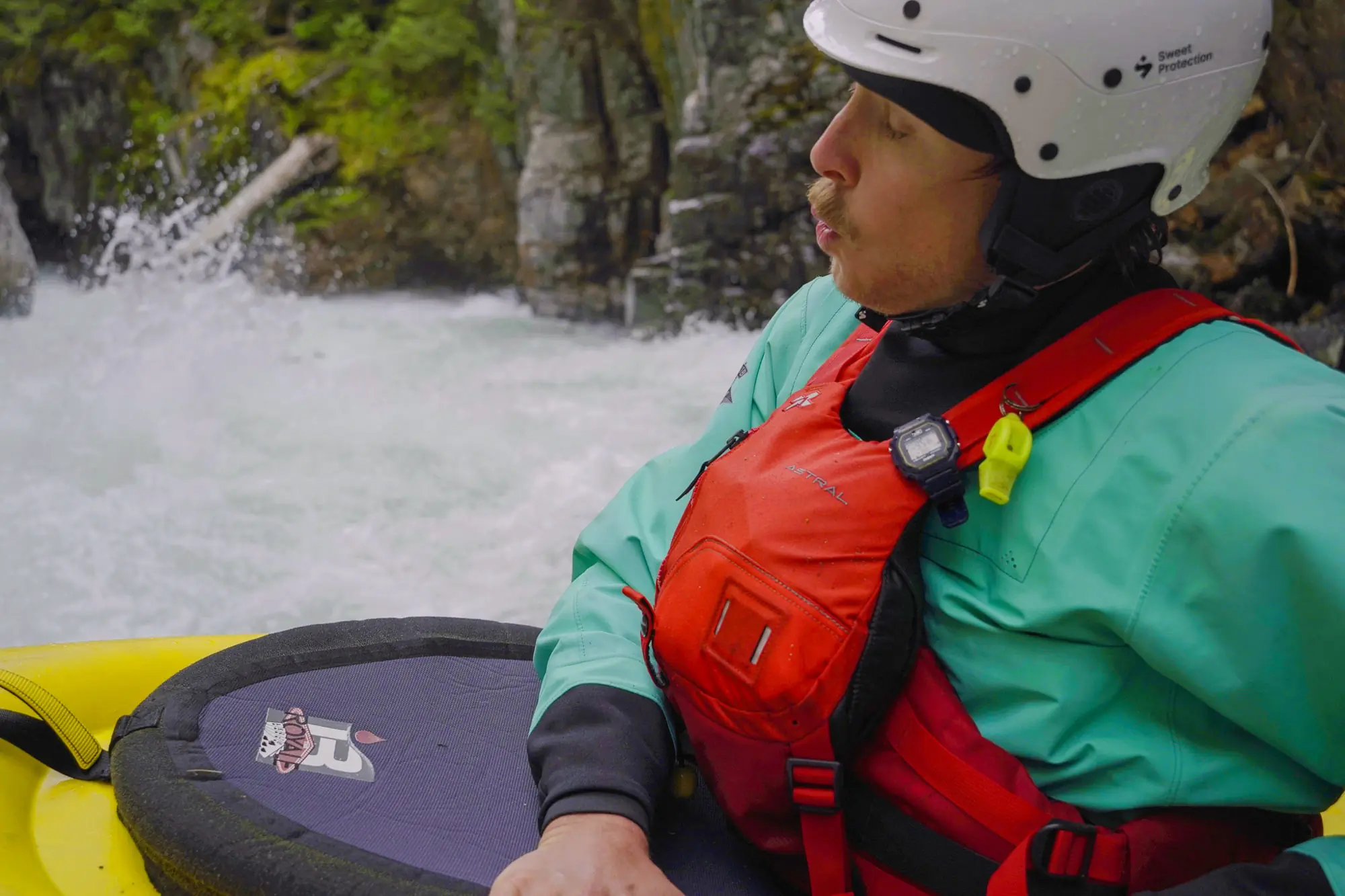
This is where the Indus steps in. Designed specifically for big water and professional whitewater instructor gear needs, the Indus ups the ante to 22 lbs of buoyancy. While it shares some DNA with the GreenJacket, it is a different beast altogether. The Indus prioritizes keeping you on top of aerated current buoyancy over the absolute maximum mobility required for park-and-play freestyle.
| Feature | Astral Indus | Astral GreenJacket |
|---|---|---|
| Buoyancy | 22 lbs | 16.5 lbs |
| Weight | 3.2 lbs | 2.9 lbs |
| Primary Storage | Low-profile front pockets | Large Clamshell pocket |
| Knife Position | Internal slot & External tab | External tab |
| Material | 500D / 200D Cordura | 500D Cordura |
| Best For | High-volume / Expedition | Technical Creeking |
Transitioning from a GreenJacket to an Indus involves a slight trade-off. The Indus is bulkier because that extra 5.5 lbs of flotation has to go somewhere. However, the use of internal knife storage and a flatter pocket profile helps keep the vest feeling manageable when you are climbing back into a raft or scrambling over river rocks. In the Astral Indus vs GreenJacket for Class V debate, the choice usually comes down to water volume. If your swims are likely to be deep and long in turbulent eddy lines, the extra flotation of the Indus is a literal lifesaver.
Mobility vs. Safety: Can You Still Roll?
The most common concern we hear about the best pfd for high volume whitewater rivers is the bulk. Paddlers wonder if 22 lbs of foam will interfere with their C-to-C roll or make it difficult to reach across their deck for a technical stroke.
Designers have countered this by using more ergonomic foam architecture. By tapering the foam at the sides and using a multi-panel "tectonic" approach, they keep the front and back panels thin while concentrating the volume where it doesn't hinder arm movement. While you might feel the extra thickness during a low brace, the benefits of 22 lbs flotation in whitewater rescue vests far outweigh the minor adjustment in paddling style.
In fact, for many kayakers, the extra lift makes the setup for a roll easier because the vest is actively trying to push your torso back toward the surface. If you are regularly tackling Class V runs, you aren't just looking for comfort; you are looking for a safety margin. Staying above aerated water in Class V rapids is much easier when your gear is doing the heavy lifting for you.
FAQ
What is considered a high float PFD?
A high float PFD is a life jacket designed with extra buoyancy specifically for use in highly aerated or turbulent water conditions. While standard whitewater vests offer around 15 to 16.5 lbs of lift, high float models generally start at 22 lbs and can go as high as 34 lbs for commercial rafting applications. These vests are engineered to compensate for the lower density of water in large rapids.
How many pounds of buoyancy does a high float life jacket have?
Most high float PFDs designed for individual kayakers or guides offer between 22 and 26 lbs of buoyancy. Commercial whitewater rafting vests, which are often Type V PFDs, frequently offer even more, ranging from 25 to 34 lbs. This provides the necessary lift to keep a swimmer's head above the foam in high-volume river environments.
Who needs a high float PFD?
High float PFDs are essential for paddlers engaging in Class IV and Class V kayaking, high-volume expedition river running, or professional whitewater guiding. They are also highly recommended for larger individuals who require more displacement to stay afloat, or for anyone paddling in rivers that feature heavy aeration and powerful hydraulics where standard buoyancy might be insufficient.
Is a high float PFD better for whitewater rafting?
Yes, high float PFDs are the standard for whitewater rafting, especially in commercial settings. Because rafters are more likely to be "swimmers" than kayakers who can roll, having the extra buoyancy helps keep them on the surface of the water and makes it easier for guides to pull them back into the boat. Most rafting companies use vests with a minimum of 22 lbs of flotation.
Do high float PFDs make it harder to swim?
While the extra foam is slightly bulkier, high float PFDs do not necessarily make it harder to swim properly using the defensive whitewater swimming position. They do, however, make it much harder to dive under waves or obstacles. The primary intent is to keep you on the surface, so while aggressive "overhand" swimming might feel different due to the chest bulk, your overall safety and ability to stay on top of the water are significantly improved.