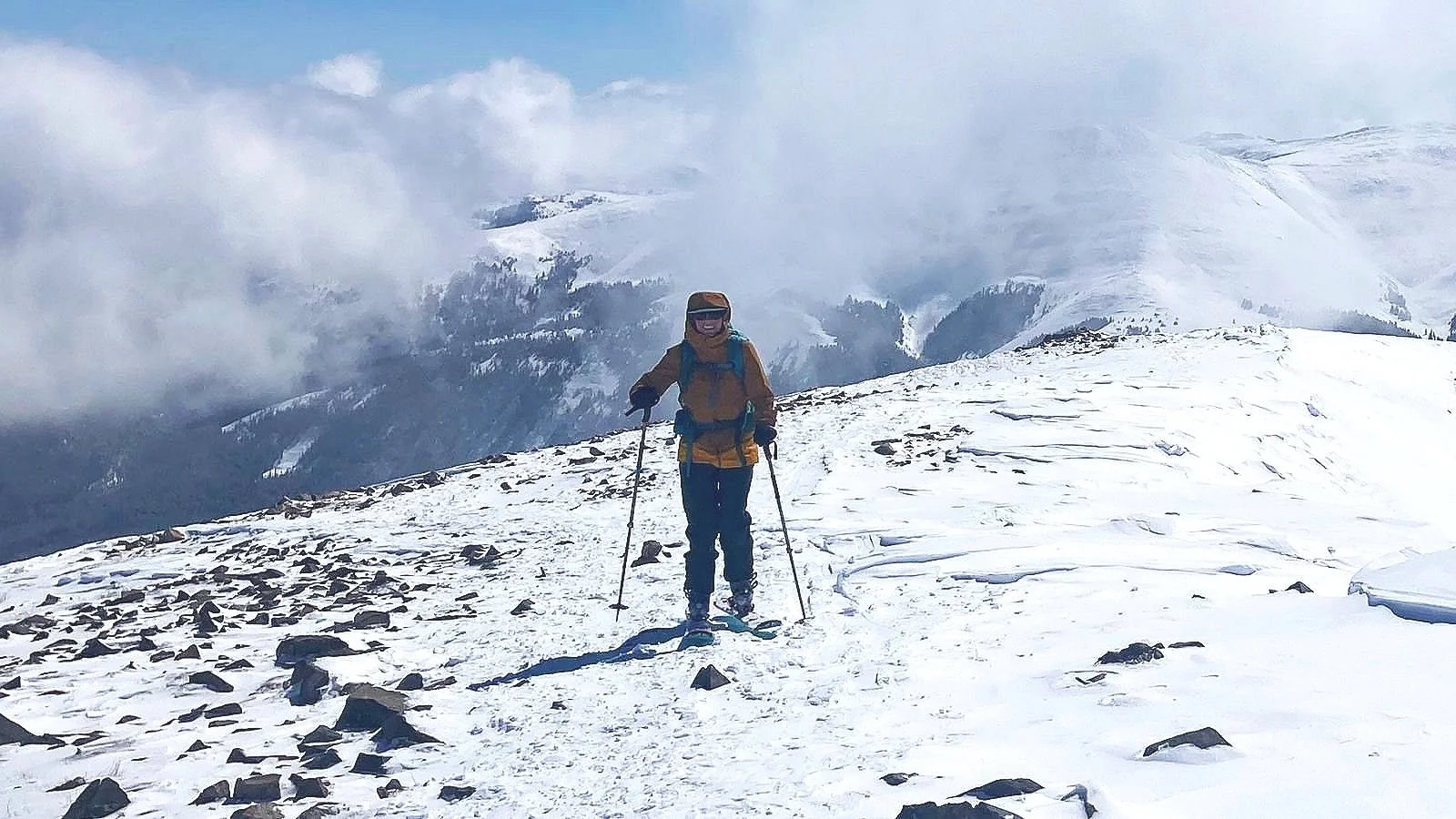
Moving beyond the boundary ropes of a ski resort is a transformative experience. There is a profound silence in the winter wilderness that you simply cannot find near a chairlift. However, that silence comes with a heavy weight of personal responsibility. Unlike the controlled environment of a resort, the backcountry has no ski patrol to blast away unstable snow or mark hidden obstacles. Statistics show that approximately 90 percent of all avalanche accidents are triggered by the victim or a member of their party. This staggering figure highlights why human decision-making is the most critical factor in your safety. For those looking to explore, understanding backcountry skiing basics is not just about technique; it is about survival.
Quick Facts
- Education Standard: AIARE Level 1 or equivalent is the mandatory starting point.
- Safety Trinity: You must carry a 3-antenna beacon, a 2-meter+ probe, and a metal shovel.
- Risk Zone: Most avalanches occur on slopes between 30 and 45 degrees.
- Human Error: 90% of avalanche accidents are triggered by the skiers themselves.
- Preparation: On average, US data shows 27 avalanche fatalities per year, emphasizing the need for prep.
- Tech Adoption: Roughly 91 percent of backcountry users now utilize specialized mobile apps for navigation.
Backcountry skiing basics begin with formal avalanche education because wilderness terrain lacks the professional patrol and hazard mitigation found at resorts. Taking an AIARE Level 1 course is the industry-standard first step, teaching skiers how to recognize terrain traps, assess snowpack stability, and perform companion rescues. This education is vital for transitioning from resort skiing to human-powered travel in uncontrolled environments where risk assessment is a shared group responsibility.
The Educational Path: Why AIARE Level 1 is Non-Negotiable
If you are wondering how to start backcountry skiing, the answer does not begin at a gear shop; it begins in a classroom. In a resort, "safety" is a service provided by the mountain management. In the backcountry, safety is a skill you must bring with you. An AIARE Level 1 course—short for the American Institute for Avalanche Research and Education—is the foundational building block for any aspiring winter explorer.
During this three-day course, you move beyond simple awareness and into the world of active risk management. You will spend time in the field learning how to conduct snow stability tests and how to use your safety tools under pressure. For many, the most eye-opening part of AIARE level 1 avalanche course content is the focus on human factors. Research shows that introductory avalanche courses successfully lead participants to adopt more conservative risk perceptions. Students who complete these courses also show an increased frequency of proactive safety behaviors, such as performing trailhead gear checks before every tour.
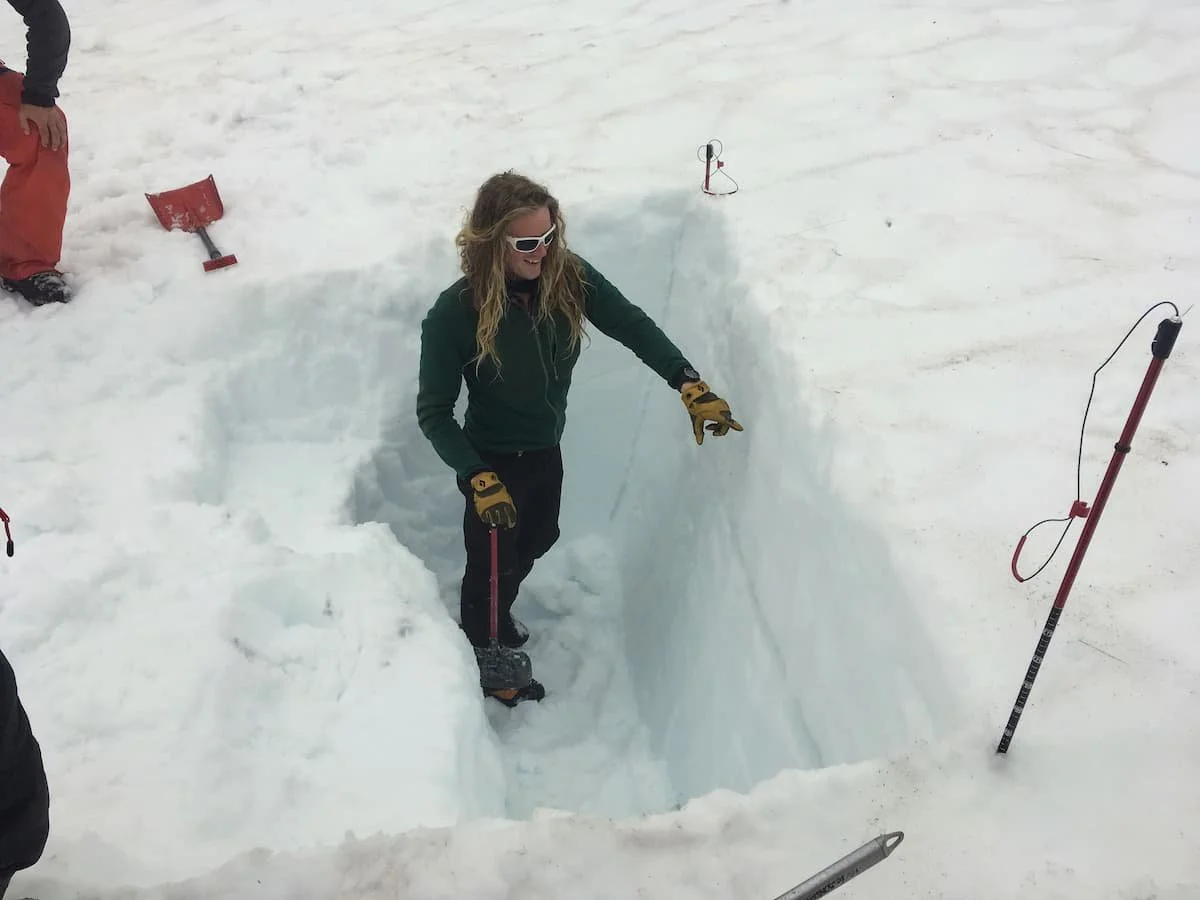
Beyond snow science, a course provides essential backcountry skiing safety tips regarding companion rescue. If someone in your group is buried, you are their only hope for survival. There is no time to call for help; the rescue must happen within minutes. Learning the choreography of a beacon search, probing techniques, and strategic shoveling turns a chaotic emergency into a practiced, life-saving response.
Skill Prerequisites: Assessing Your Resort Foundation
Before you venture into the wild, you need to be honest about your skiing ability. The backcountry is not the place to learn how to turn. Experts generally recommend that you be comfortable on "blue square" or intermediate terrain in all weather conditions before transitioning from resort to backcountry skiing skills.
In the backcountry, you will rarely find perfect corduroy. Instead, you will encounter "variable" snow—everything from wind-crust and heavy "Sierra cement" to deep, bottomless powder. To prepare, spend more time at the resort skiing the "crud" and unmaintained side-country. This builds the leg strength and balance necessary for unmanaged terrain.
Furthermore, backcountry travel is human-powered travel. You must be physically conditioned for the aerobic demands of climbing mountains. Mastering uphill efficiency is just as important as the descent. Many beginners choose to practice on designated uphill routes at their local ski area. This allows you to master your gear, practice kick turns on steep sections, and manage your layers to avoid overheating in a controlled environment.
Essential Gear: The Safety Trinity and Technical Hardware
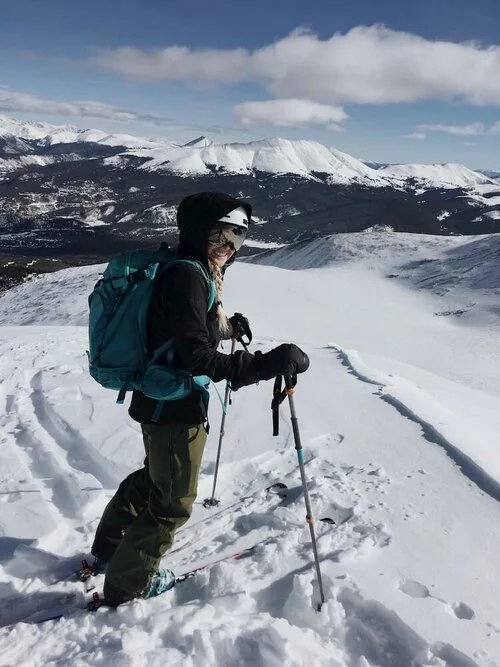
Selecting essential backcountry skiing gear can be overwhelming for beginners. The most important equipment is the "Safety Trinity." These three items must be on your person and accessible at all times:
- Avalanche Transceiver (Beacon): A modern, 3-antenna digital device helps you locate others or be located if buried.
- Probe: A collapsible pole, usually 2 to 3 meters long, used to pinpoint the exact location and depth of a buried subject.
- Shovel: A dedicated metal shovel. Plastic shovels can snap in the dense debris of an avalanche slide.
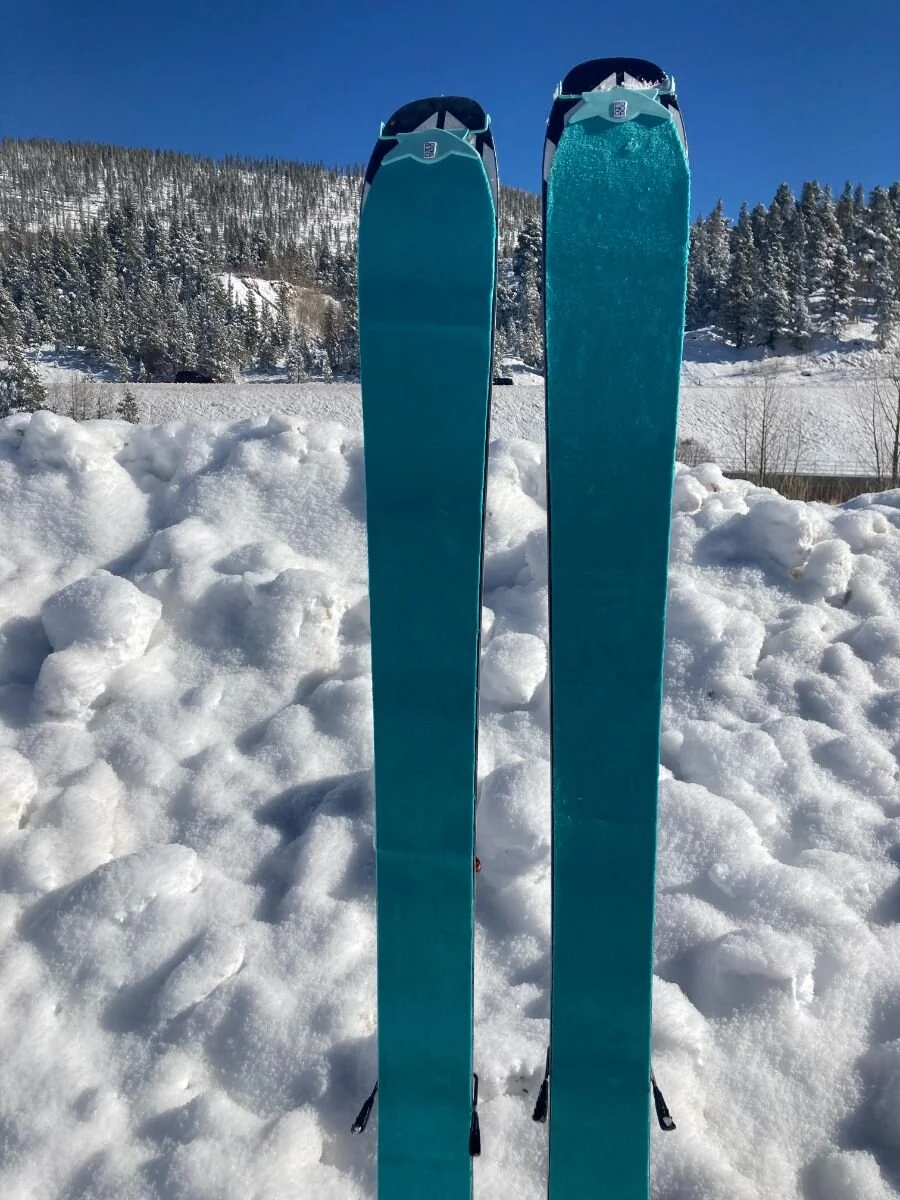
Your hardware should be tailored for both the climb and the ride. Using a specialized beginner guide to using climbing skins will help you understand how these fabric strips allow your skis to grip the snow while sliding forward during the ascent.
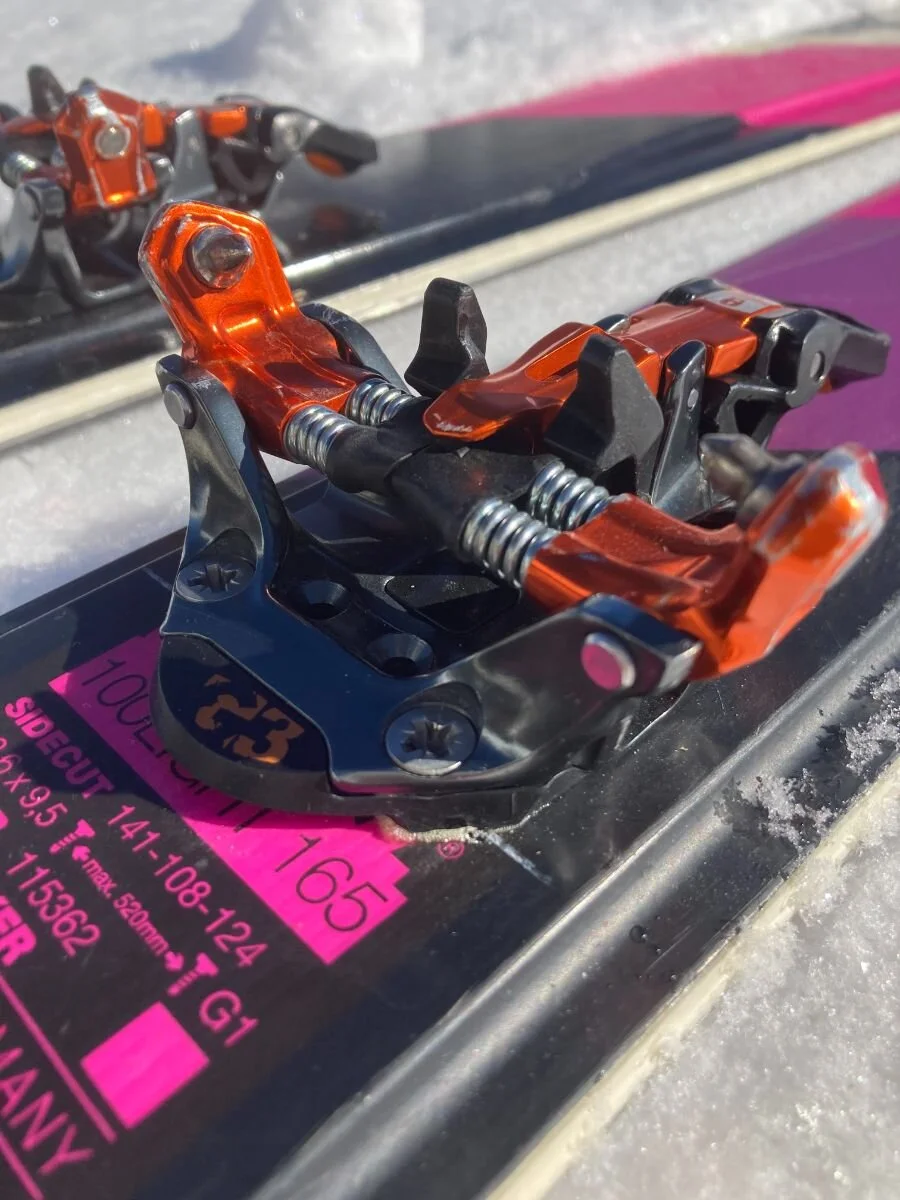
When choosing bindings, you must decide between frame and pin tech bindings. Frame bindings look like traditional resort bindings but have a hinge for walking, making them a heavier but familiar choice. Pin bindings are the gold standard for weight savings, requiring boots with special metal inserts.
| Gear Type | Recommended Spec | Why It Matters |
|---|---|---|
| Beacon | 3-Antenna Digital | Faster, more accurate signal tracking. |
| Probe | 240cm+ Aluminum | Ensures enough reach through deep debris. |
| Shovel | T-Grip, Metal Blade | Able to penetrate hardened avalanche snow. |
| Boots | Walk Mode + Tech Inserts | Essential for range of motion on the ascent. |
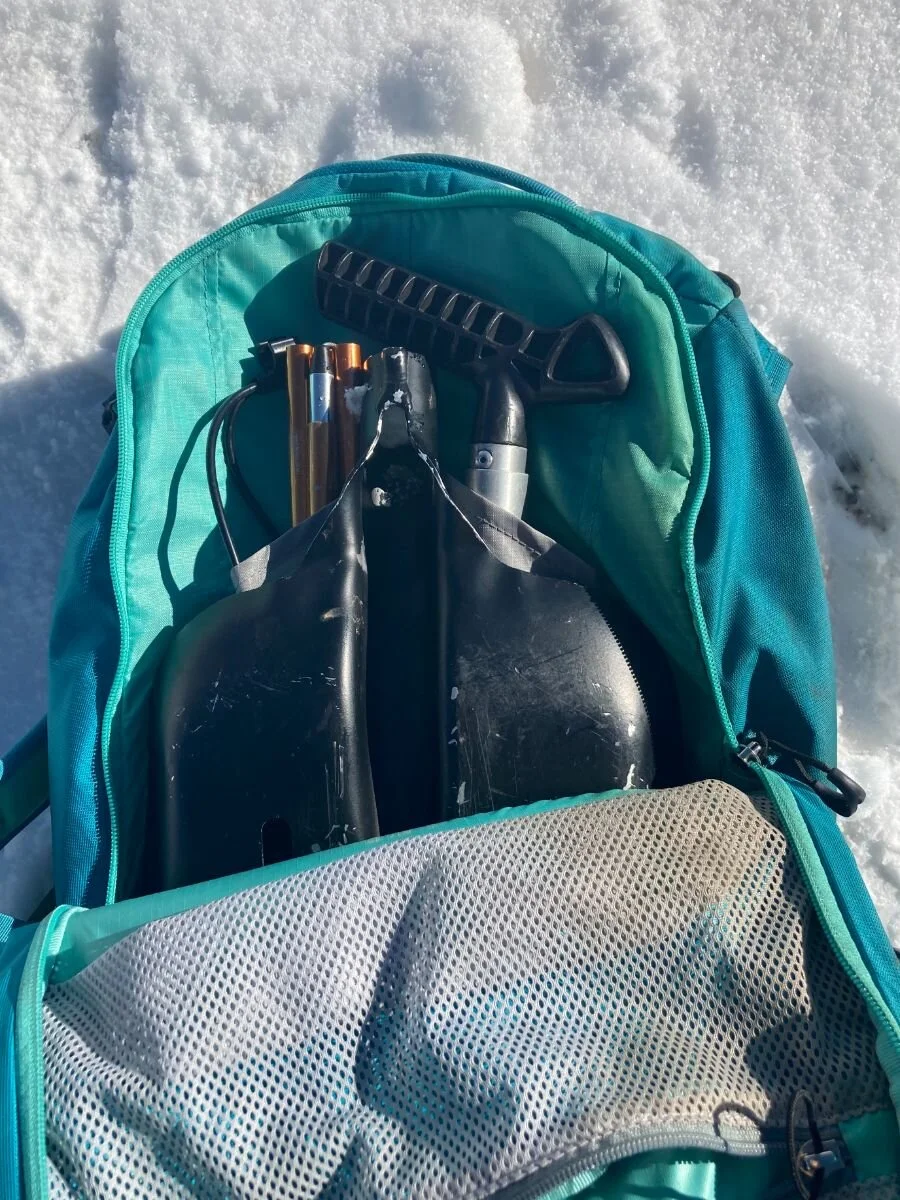
Finally, your pack matters. An essential backcountry skiing safety equipment list always includes a dedicated ski backpack. These bags feature a separate "wet" compartment for your shovel and probe, ensuring that you don't have to dig through extra layers or snacks to find your rescue tools in an emergency.
Risk Assessment: The Avalanche Triangle and Field Awareness
Even with the best gear, your most powerful tool is your brain. Understanding the "Avalanche Triangle"—Terrain, Snowpack, and Weather—is central to backcountry skiing basics. Safety involves more than just looking at the snow; it requires knowing how to interpret avalanche weather forecasts from local centers like the CAIC or NWAC.
Always keep a lookout for environmental "Red Flags" during your tour. If you experience these, it is time to transition and head back to safer, lower-angle terrain.
Field Checklist: Avalanche Red Flags
- Whumpfing: A hollow "thump" sound as the snowpack settles beneath you.
- Shooting Cracks: Cracks that spider-web out from your skis as you move.
- Recent Avalanches: If you see other slides in the area, the conditions are likely unstable.
- Rapid Warming: Significant temperature rises or rain can quickly destabilize the snow.
- Strong Winds: Wind-blown snow can load slopes much faster than steady snowfall.
Terrain traps are another vital consideration. A small slide that might not bury you on an open slope can become fatal if it pushes you into a gully, over a cliff, or into a tight stand of trees. Awareness of your surroundings and constant group decision-making are what separate a successful day from a tragedy.
FAQ
Do you need an avalanche safety course for backcountry skiing?
Yes. It is considered the industry standard for anyone traveling in unmanaged winter terrain. Without formal training, you lack the skills to perform a rescue or properly evaluate the snowpack, which puts yourself and your partners at significant risk.
What equipment do I need for backcountry skiing?
At a minimum, you need a 3-antenna avalanche beacon, a probe, and a metal shovel. For movement, you require skis or a splitboard equipped with touring bindings, climbing skins, and boots with a walk mode. A dedicated backcountry pack is also essential for organizing your safety gear.
How do I start backcountry skiing for the first time?
Start by ensuring your downhill skills are solid at a resort. Then, sign up for a sanctioned avalanche safety course. Once you have the education and gear, find a mentor or hire a professional guide for your first few outings to learn how to navigate terrain and interpret forecasts in a real-world setting.
Is backcountry skiing harder than resort skiing?
Physically, yes. Because it is human-powered travel, you will spend roughly 90% of your time climbing and only 10% skiing. Technically, the skiing can also be more difficult due to variable snow conditions that are never groomed or packed down.
What are the essential safety items for backcountry skiing?
Beyond the beacon, probe, and shovel, essential safety items include a first aid kit, a headlamp, an emergency bivvy or blanket, and a communication device. Modern users also prioritize mobile navigation apps with offline maps and terrain-shading features to identify slope angles.
Conclusion & Next Steps
Stepping into the backcountry is a commitment to lifelong learning. While the gear is an investment in your comfort and mobility, your education is the investment in your life. Before you head out for your first tour, book an AIARE Level 1 course and spend time practicing with your beacon in a local park. Read your local avalanche forecast every single morning, even if you aren't skiing, to understand how the snowpack evolves throughout the season. By prioritizing safety and responsibility, you ensure that the wilderness remains a place of joy and adventure for years to come.