Quick Facts
- Overall Winner: Integrated systems combining 4G LTE tracking and CAN-bus immobilization for multi-stage defense.
- Best Deterrent: Heavy-duty steering wheel locks with high-visibility finishes that signal a difficult target to thieves.
- Recovery Stat: Stolen vehicles equipped with real-time car gps trackers achieve a recovery rate exceeding 90%, significantly higher than the 60% standard rate.
- Insurance Tip: Installing Thatcham-certified car security devices can lower annual insurance premiums by 5% to 20% depending on the provider.
- Modern Threat: Signal cloning and relay attacks account for 94% of modern vehicle thefts, making RFID signal blocking essential.
- Market Outlook: The global market for stolen vehicle recovery systems is expected to reach USD 10.40 billion in 2026.
The most effective car security devices for 2026 include a combination of visible deterrents and silent recovery systems. Steering wheel locks act as a physical barrier, while vehicle immobilizers and remote battery disconnect switches prevent the engine from starting. Real-time car gps trackers provide a final layer of security by allowing owners to monitor location and assist law enforcement in recovery.
The 2026 Threat Landscape: Why Your Factory Security Isn't Enough
Car theft has evolved into a high-tech game of signal cloning and relay hacks. In 2026, protecting your vehicle requires more than just a loud alarm. Modern criminals no longer need to smash windows or hotwire ignitions; they use sophisticated electronic tools to intercept the signal from your key fob. This process, often called a relay attack, allows them to unlock and start a car in under sixty seconds while the keys sit safely on a kitchen counter inside the owner's home.
By 2026, approximately 66.7% of new passenger vehicles are expected to integrate factory-fitted anti-theft systems combining immobilizers and software-based alerts. However, as these systems become standardized, professional thieves develop standardized ways to bypass them. Relying solely on the manufacturer's security often leaves a vehicle vulnerable to CAN-bus hacking, where a thief plugs a device into a headlight or external sensor to "talk" directly to the car’s computer.
To stay ahead, preventing keyless entry relay theft at home is the first line of defense. This involves using signal blocking Faraday cages or specialized pouches to ensure your car cannot hear your key fob unless you are standing right next to it. Understanding that your car is essentially a rolling computer helps in choosing the right layers of protection.
Layer 1: Deter & Delay – Mechanical Physical Barriers
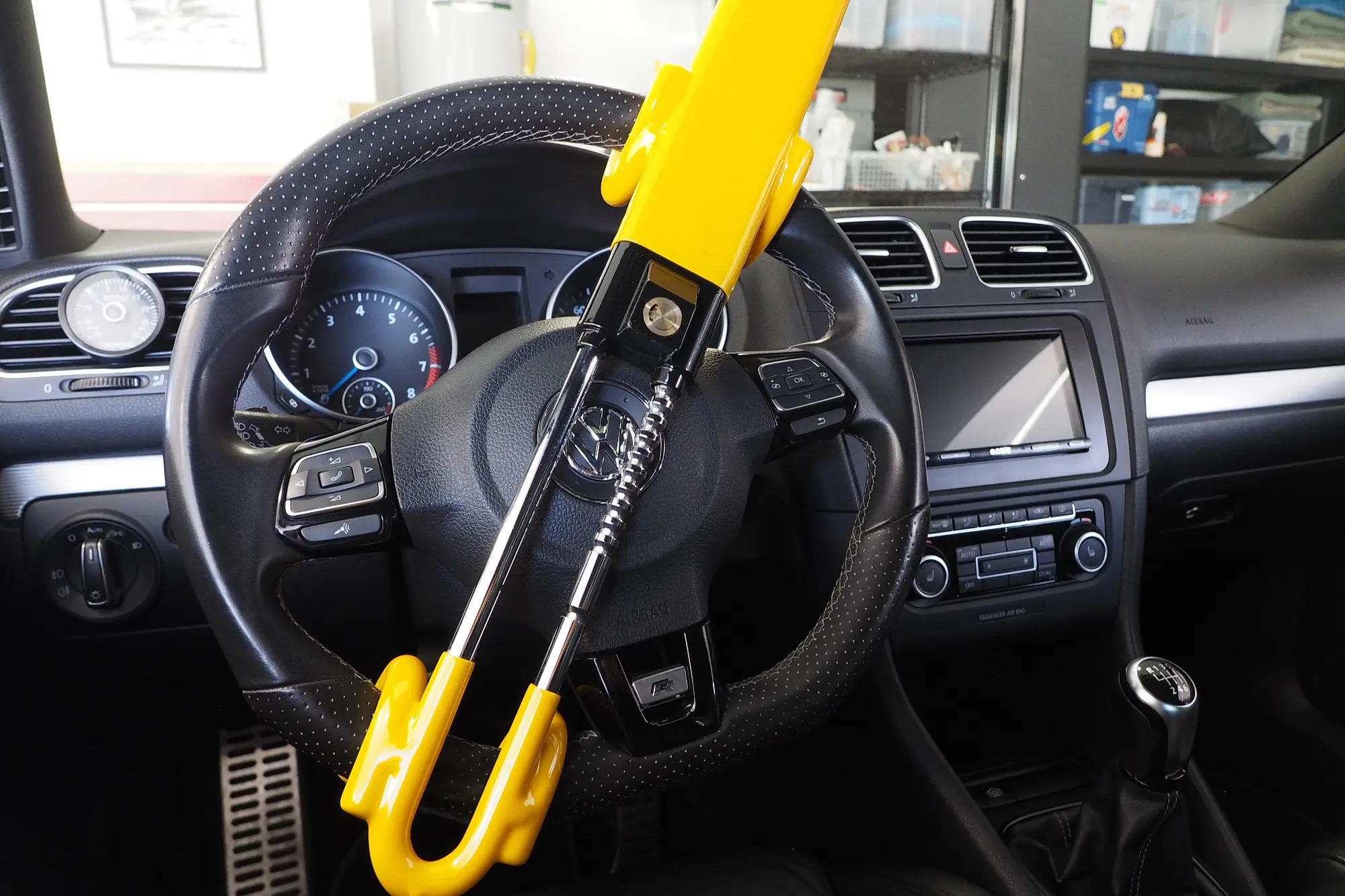
In a digital age, old-school mechanical solutions remain surprisingly effective. If a thief sees heavy-duty steering wheel locks for daily parking through the window, they are likely to move on to an easier target. The goal here is not necessarily to make the car unstealable, but to make the theft take too long and involve too much noise.
Visible deterrents vs silent car alarms comparison highlights a key psychology: a silent alarm tells you the car is gone, but a bright yellow bar on the wheel prevents the attempt entirely. Many modern locks use high-tensile alloy steel that resists sawing, drilling, and Hammering. Some premium models even offer insurance deductible protection, promising to pay your insurance deductible if the vehicle is stolen while the lock is properly engaged.
For those with specialized vehicles, finding the best wheel lock clamps for trailers and campers is vital. These devices prevent the wheels from rotating at all, securing the asset even if it is left in an unmonitored storage lot. Unlike a sensor that might fail, a physical clamp provides constant resistance regardless of battery life or signal strength.
| Device Type | Deterrence Level | Average Price | Best Use Case |
|---|---|---|---|
| Steering Wheel Lock | High | $40 - $120 | Daily street parking |
| Wheel Clamp | Extreme | $80 - $200 | Long-term storage/Trailers |
| Pedal Lock | Medium | $30 - $70 | Secondary reinforcement |
| Gear Shift Lock | Medium | $50 - $100 | Manual transmission cars |
Layer 2: Defend – Vehicle Immobilizers and Digital Kill Switches
If a thief manages to get inside the cabin, the next layer of defense should prevent the engine from firing. Beyond basic factory settings, advanced vehicle immobilizers now integrate with the car’s CAN-bus system. These digital "ghost" systems require a specific sequence of buttons—such as pressing the volume up twice and the window toggle once—before the ignition will engage. Since there is no physical fob to clone and no wire to cut, these are nearly impossible for a thief to bypass on the fly.
For many enthusiasts, a hidden kill switch installation for vehicle protection remains a favorite DIY project. By installing a physical switch in a secret location that interrupts the fuel pump or starter solenoid, you create a fail-safe that no electronic hacking tool can solve. However, modern cars with sensitive electronics often require professional hardwired power kits to ensure the modification doesn't trigger error codes or void warranties.
OBD-II port compatibility is another factor to consider. Many thieves use the onboard diagnostic port to program a new key. You can purchase port locks or relocation kits that either lock the port behind a metal plate or move it to a different location, effectively "blinding" the thief’s hacking device.
Layer 3: Detect & Recover – Real-Time Car GPS Trackers
If the worst happens and the vehicle is moved, the focus shifts to recovery. Real-time vehicle tracking systems for theft recovery bridge the gap between a lost asset and a successful police intervention. These devices use GNSS satellite navigation to pinpoint the car's location within a few meters.
Selecting a car gps tracker depends on power needs and subscription preferences. Hardwired or OBD-II units offer continuous power and real-time updates, making them ideal for daily drivers. Conversely, battery-powered devices are better for unpowered trailers. Many of these units now feature 4G LTE connectivity to ensure they can transmit data even in areas with spotty coverage.
One of the most powerful features of modern trackers is perimeter geofencing. This allows you to draw a digital fence around your home or office. If the car moves outside that area without your authorization, you receive motion-activated notifications on your smartphone instantly. While some people look for the best no-subscription GPS trackers for cars, keep in mind that these often rely on Bluetooth (like Apple AirTags) and lack the active alerts and precision found in dedicated cellular systems.
| Tracker Feature | Hardwired Tracker | Battery-Powered (Portable) | Bluetooth Tag (AirTag) |
|---|---|---|---|
| Real-Time Updates | Every 10-60 seconds | Every 1-5 minutes | Varies (depends on nearby phones) |
| Power Source | Vehicle battery | Internal rechargeable | Replaceable coin cell |
| Connectivity | 4G LTE / 5G | 4G LTE | Bluetooth |
| Monthly Fee | $15 - $25 | $10 - $20 | $0 |
| Best For | Theft Recovery | Asset Tracking | Finding lost keys |
TCO Breakdown: The Real Cost of Subscriptions and Insurance Discounts
When choosing car security devices, it is important to look at the Total Cost of Ownership (TCO). A device might be cheap upfront but require a hefty monthly subscription to maintain the cloud features that make it useful.
- Hardware Costs: Steering wheel locks are a one-time purchase. GPS trackers usually range from $20 to $150.
- Subscription Fees: High-end tracking and CAN-bus monitoring usually cost between $120 and $250 annually.
- Insurance Benefits: Many insurance companies offer discounts for Thatcham-approved or S5-rated devices. In many cases, the insurance savings over two years will completely cover the cost of the hardware and subscription.
- Deductible Protection: Some mechanical lock brands offer a guarantee that covers your insurance deductible (up to $500 or $1,000) if their device is defeated, providing a financial safety net.
By investing in a layered approach, you are not just buying gear; you are buying time. Most car thefts are crimes of opportunity. By adding physical, digital, and tracking layers, you make your vehicle the least attractive option on the block.
FAQ
What are the most effective car security devices?
The most effective car security devices for 2026 include a combination of visible deterrents and silent recovery systems. Steering wheel locks act as a physical barrier, while vehicle immobilizers and remote battery disconnect switches prevent the engine from starting. Real-time GPS trackers provide a final layer of security by allowing owners to monitor location and assist law enforcement in recovery.
Do car security systems reduce insurance premiums?
Yes, many insurance providers offer significant discounts for vehicles equipped with certified car security devices. Systems that are Thatcham-approved or feature S5-rated tracking can often lead to a reduction in annual premiums of up to 20%, as they statistically lower the risk of total loss for the insurer.
How does a car immobilizer work?
A car immobilizer works by preventing the engine from starting unless the correct digital "handshake" is received from a key fob or a manual code. Most modern systems use a transponder chip or a CAN-bus digital signal to disable the fuel system or ignition, ensuring that even if a thief gets inside, the vehicle remains stationary.
Is a GPS tracker worth it for car security?
A GPS tracker is highly worth the investment, particularly for high-value or frequently targeted vehicles. Vehicles equipped with active car gps trackers have a recovery rate exceeding 90%, compared to just 60% for non-tracked vehicles. The ability to provide live location data to police is often the only way to recover a stolen car before it is stripped for parts.
How can I protect my car from relay attacks?
To protect against relay attacks, owners should use RFID signal blocking solutions like Faraday bags or boxes to store key fobs when at home. These containers block the signals that thieves attempt to amplify. Additionally, combining these with mechanical deterrents ensures that even if a thief bypasses the digital entry, they still face a physical obstacle.
The best car anti-theft devices 2026 offers are those that work together to deter the thief, defend the ignition, and detect any unauthorized movement. By choosing a layered strategy, you ensure your vehicle stays exactly where you left it.