Quick Facts
- Physical Readiness: Puppies should wait until growth plates close, typically between 12 and 24 months.
- Hydration Math: Budget 8 ounces of water per dog for every hour of trail activity.
- Ideal Condition: Aim for a Body Condition Score of 4 or 5 on a 9-point scale before starting strenuous treks.
- Core Commands: Recall, Leave It, Stay, and Heel are non-negotiable for safety.
- Pack Weight: Limit trail packs to 10-15% of the dog's total body weight.
- Etiquette: Always yield the trail to horses, mountain bikers, and other hikers.
Preparation for hiking with dogs requires a veterinary clearance to ensure physical readiness and up-to-date pest preventatives. Puppies should typically wait until their growth plates close, usually between one and two years old, before participating in strenuous hikes. Owners should build a dog's endurance gradually by increasing either distance or elevation gain—but not both simultaneously—and monitor closely for signs of overexertion like heavy panting or lagging.
Biological Assessment: Is Your Dog Ready?
Before the first boot hits the dirt, every responsible owner needs to understand the biological timeline of their companion. As an editor and a trainer, I often see enthusiastic owners taking puppies on high-elevation gains far too early. The most critical factor is growth plate development. These are the soft areas of developing cartilage at the ends of long bones in growing dogs. If these plates are stressed or damaged before they calcify and close, it can lead to lifelong joint issues or deformities.
General age guidelines for taking a puppy on its first hike suggest waiting until the dog is at least 12 months old for small breeds and up to 24 months for large or giant breeds. A quick session for veterinary clearance is essential to confirm that your dog’s skeletal system can handle the impact of uneven terrain.
Beyond age, we must look at canine joint health and current body composition. We use the Body Condition Score (BCS) to assess fitness. On a scale of 1 to 9, a trail-ready dog should sit at a 4 or 5. You should be able to feel the ribs easily without a thick layer of fat, and see a clear waistline when looking down from above. Carrying extra weight significantly increases the risk of soft tissue injuries on technical descents.
The Mental Foundation: Essential Dog Trail Training
Physical fitness is only half the battle; mental reliability is what keeps a dog alive in the wilderness. Professional dog trail training focuses on impulse control. The environment of a forest or mountain range is high-stakes, filled with distracting scents, fast-moving wildlife, and unpredictable weather.
Every trail dog must master four core safety commands before graduating to off-leash areas:
- Recall: The ability to return immediately when called, regardless of distractions.
- Leave It: Essential for preventing the ingestion of toxic plants, animal waste, or bothering snakes.
- Stay: A life-saver if you encounter a cliff edge or a narrow passage with a mountain bike.
- Heel: Necessary for navigating crowded trailheads or sensitive ecological zones.
When training a reliable recall for off leash hiking, many trainers use the S-Q-U-I-R-R-E-L test. If your dog can break their focus on a fleeing animal and return to you for high-value treat rewards, they are beginning to show the necessary maturity. We always recommend positive reinforcement to build a bond where checking in with the owner is more rewarding than chasing the local fauna.
Conditioning: Building Endurance Safely
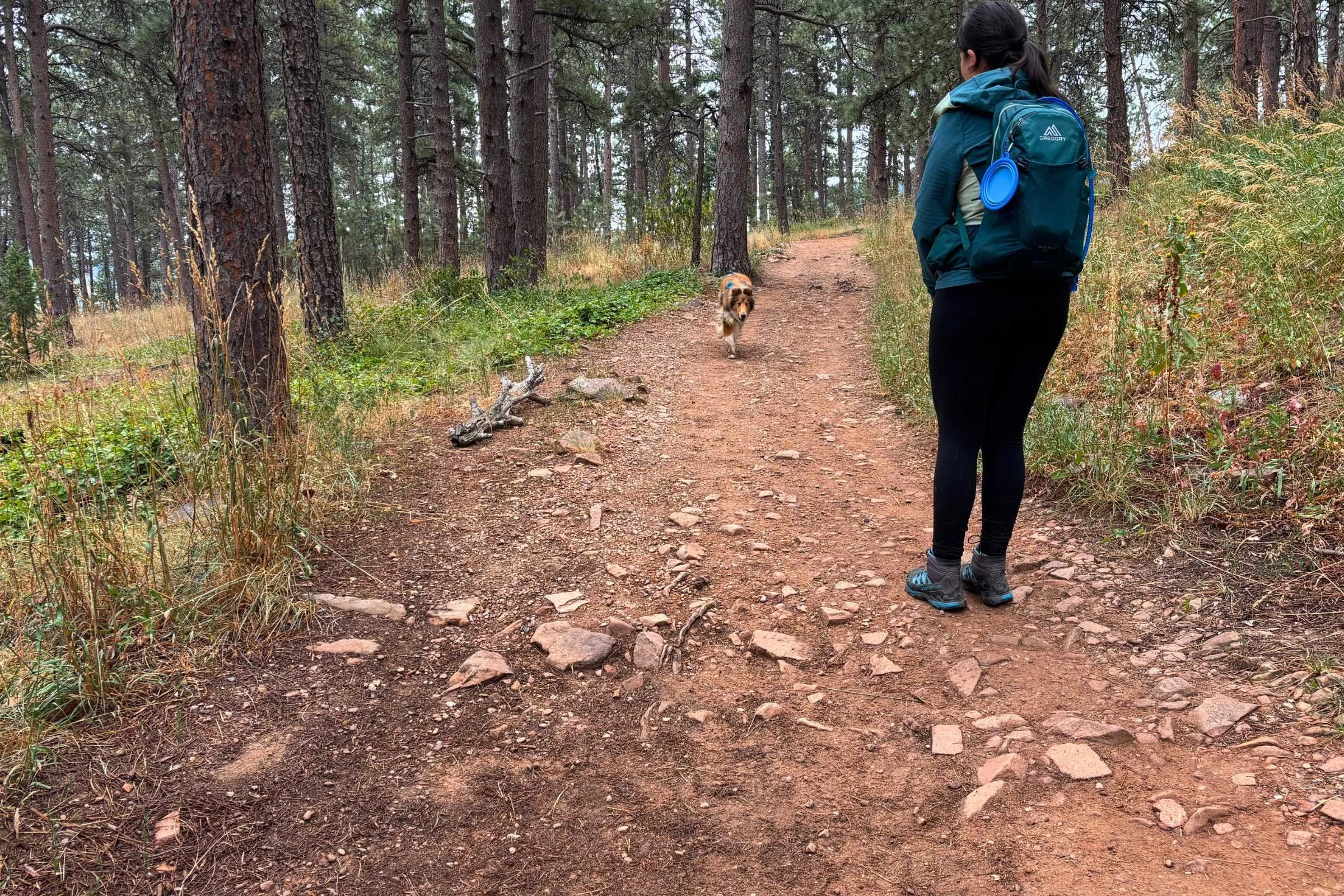
You wouldn't run a marathon without training, and your dog shouldn't be expected to tackle a ten-mile loop without preparation. Canine fitness conditioning follows the Single Variable Progression rule: never increase more than one factor (distance, incline, or pace) at a time. If you choose a steeper trail this week, keep the mileage shorter than your last flat walk.
To understand how to condition a dog for long distance hiking, follow this structured 8-week progression plan to build cardiovascular health and paw pad toughness without risking injury.
8-Week Canine Trail Conditioning Plan
| Week | Activity Type | Frequency | Duration/Intensity |
|---|---|---|---|
| 1-2 | Neighborhood Walks | 5 days/week | 30-45 mins on various surfaces (grass, pavement, gravel) |
| 3-4 | Low-Impact Trails | 3 days/week | 2-3 miles, minimal elevation gain |
| 5-6 | Moderate Inclines | 2 days/week | 4 miles, introduce small hills and uneven footing |
| 7 | Pack Loading | 3 days/week | Short walks with an empty hiking pack |
| 8 | Target Hike | 1 day/week | Full goal distance at a moderate pace |
During this period, focus on conditioning dogs for hiking by monitoring their recovery. A dog that is stiff the next morning or reluctant to move has been pushed too far.
Trail Gear & Hydration Math
The gear you choose can make or break the experience. While humans have sweat glands across their bodies, dogs primarily cool down through panting. This makes calculating trail water requirements for different dog breeds a vital safety step.
The baseline math for most active dogs is 8 ounces of water per dog per hour of moderate activity. In high temperatures or at high altitudes, this number can easily double. Never rely on natural water sources like streams, which can harbor Giardia or harmful cyanobacteria.
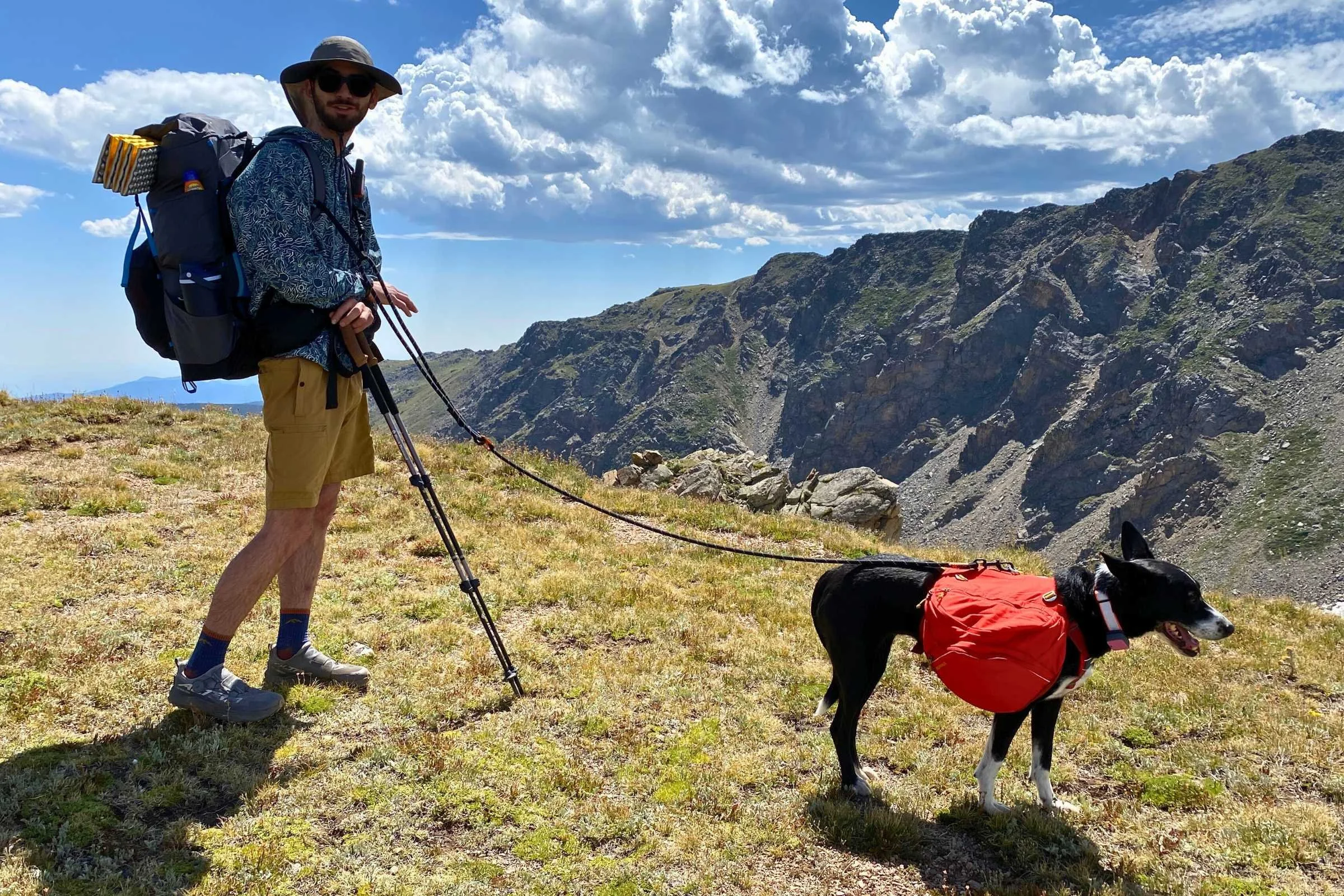
When teaching a dog to wear a hiking pack comfortably, start with the pack empty during short indoor sessions. Gradually add weight, but never exceed 15% of their body weight for most fit dogs. For a 50-pound dog, that is a maximum of 7.5 pounds. Many handlers prefer a bungee leash system to absorb the shock of sudden movements and keep their hands free for trekking poles.
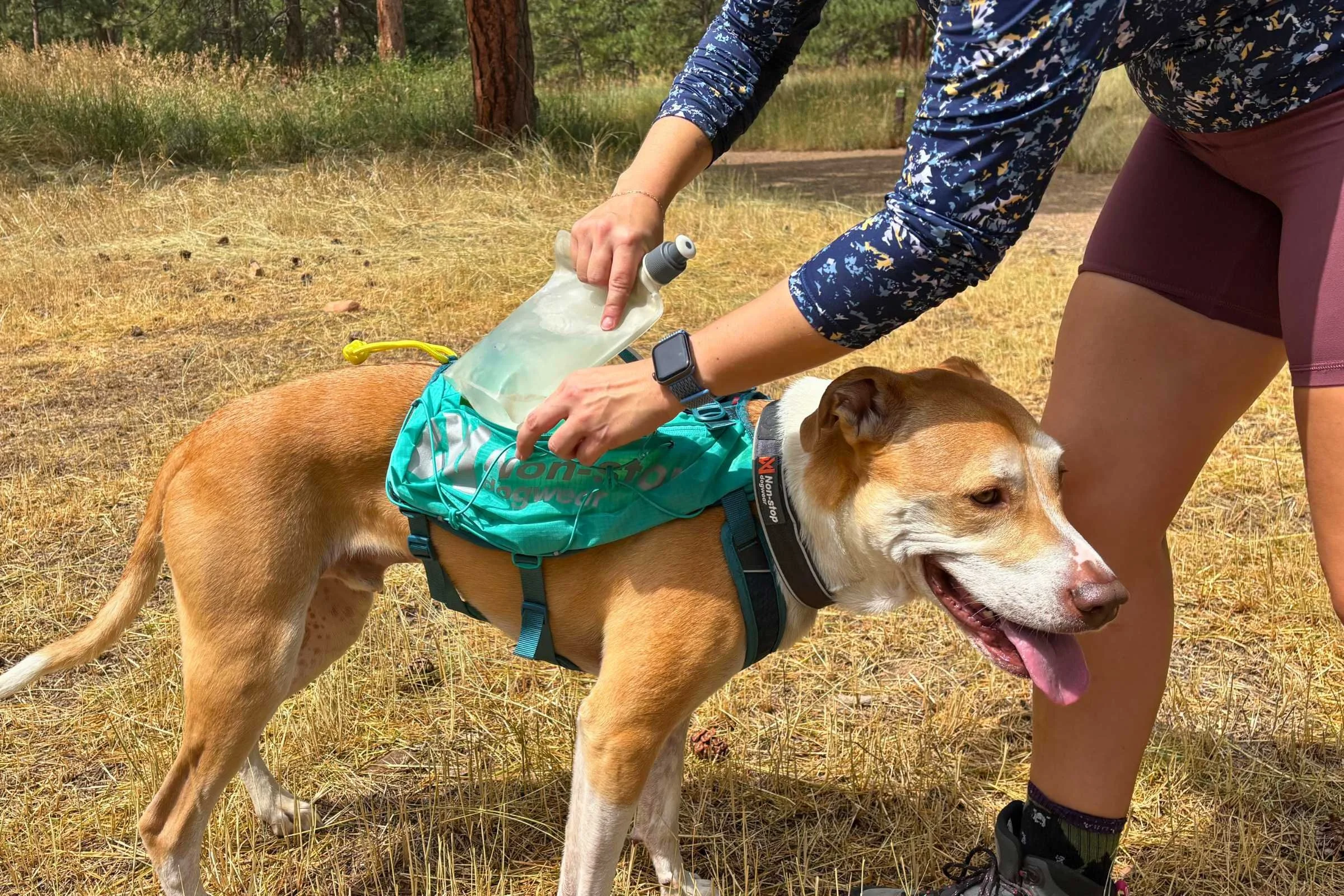
Your essential gear inside a dog hiking first aid kit should include:
- Muzzle (even friendly dogs may bite when in pain).
- Self-adhering bandages (Vetrap) that don't stick to fur.
- Antiseptic wipes and saline for eye/wound flushing.
- Emergency evacuation sling.
- Tick removal tool and tweezers.
Ethical Hiking: Etiquette & Leave No Trace
The privilege of hiking with dogs depends on our ability to share the trail respectfully. Proper dog trail etiquette for yielding to horses and bikes is non-negotiable. When you see a horse or a cyclist, move your dog to the downhill side of the trail and have them sit and stay. This prevents the dog from appearing as a predator to a horse and keeps them out of the path of a fast-moving bike.
Adhering to Leave No Trace principles is the only way to keep trails open to pets. Many people believe dog waste is "natural," but it is actually a pollutant. Domestic dog diets are high in nitrogen and phosphorus, which can disrupt the local nutrient balance and introduce invasive bacteria or parasites to native wildlife.
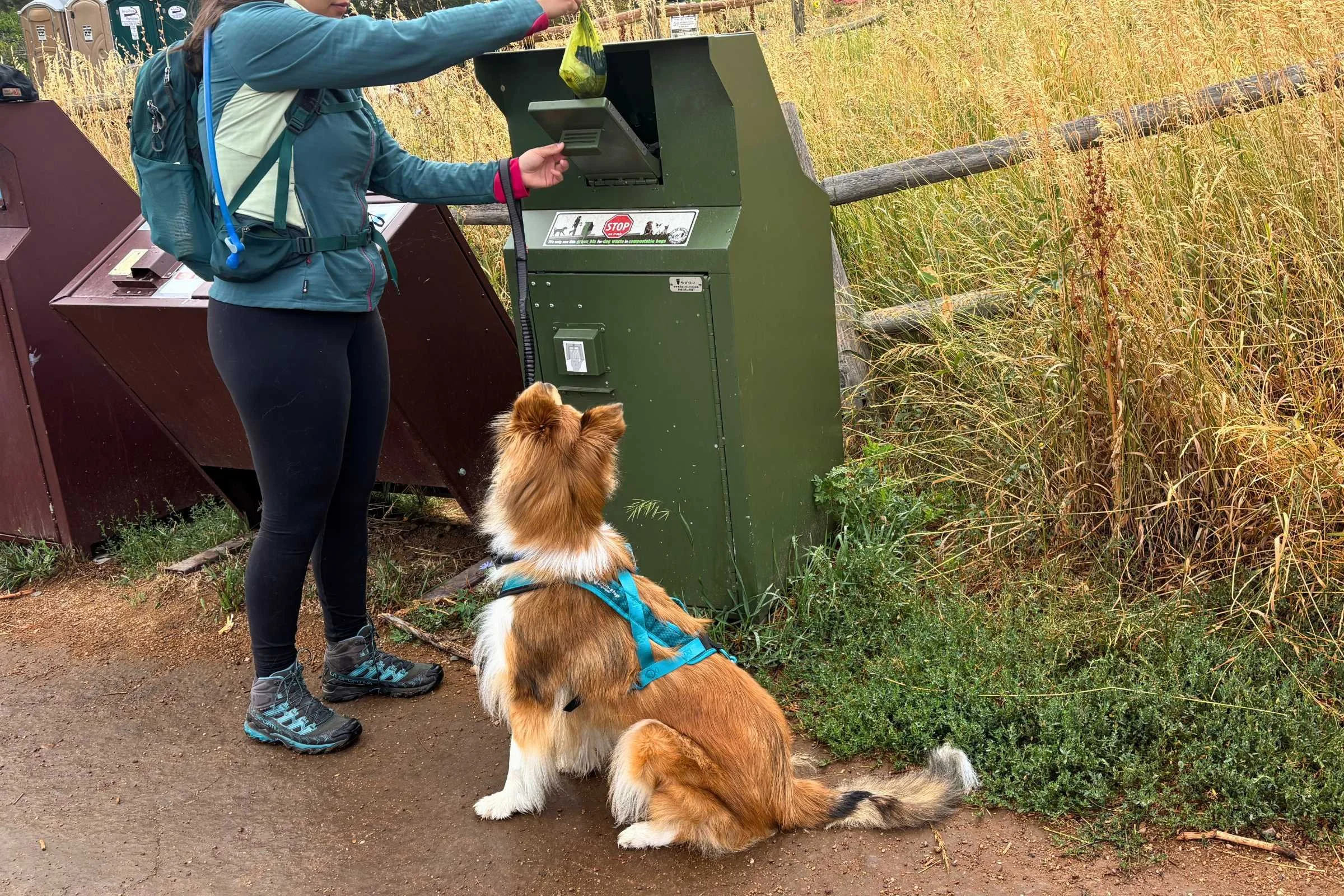
Always pack out waste in biodegradable bags. Furthermore, keeping dogs on designated paths protects fragile soil crusts and rare plant life. In alpine zones, this is especially critical, as high-altitude vegetation can take decades to recover from being trampled.
Hazard Recognition: Hidden Risks on the Trail
The wilderness presents risks that don't exist in a suburban park. According to a study analyzed by Johns Hopkins University, an estimated 422,659 adults in the United States were treated in emergency rooms for injuries related to walking leashed dogs between 2001 and 2020. This highlights that hiking safety for dogs is also about owner safety; a sudden lunge on a cliff edge can be catastrophic.
Specific trail hazards include:
- Heat Stroke: Watch for extremely heavy panting, dark red gums, and a "thick" tongue. If your dog starts lagging, stop immediately in the shade.
- Toxic Ingestibles: Horse manure can contain ivermectin (a dewormer) which is toxic to many herding breeds with the MDR1 mutation.
- Wildlife: Practice safe practices for hiking with dogs in bear country by keeping your dog on a short leash. A dog that chases a bear or moose will often run right back to its owner, bringing the angry animal with it.
- Tick Prevention: Ensure your dog is on a veterinarian-approved preventative. Winter ticks and Lyme-bearing species are increasingly common in forested regions.
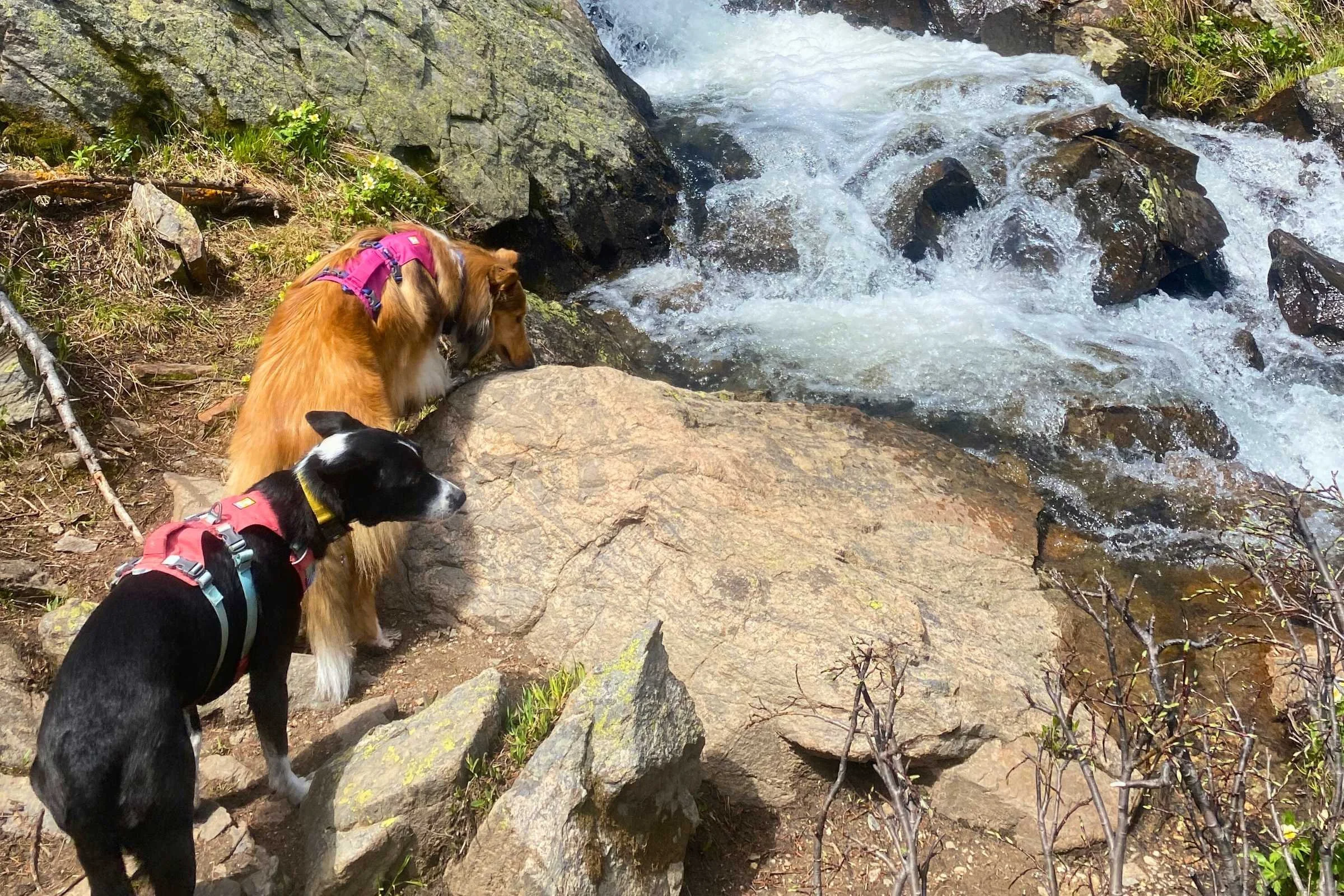
When encountering water, always use a harness with a sturdy handle. This allows you to assist the dog over slippery rocks or prevent them from being swept away in a strong current.
FAQ
How far can a dog hike in one day?
The distance depends entirely on the dog's breed, age, and current fitness level. A well-conditioned, athletic dog may handle 10 to 15 miles, while a sedentary dog or a senior might struggle after 2 miles. Always start small and monitor for signs of fatigue.
What essentials should I pack when hiking with a dog?
Key items include a collapsible water bowl, extra water, a canine first aid kit, an emergency evacuation sling, a sturdy leash, and waste bags. If તમે are in rough terrain, consider protective booties for their paw pads.
At what age is a puppy old enough to go hiking?
For light, flat walks, you can start as soon as their vaccinations are complete. However, for strenuous hiking on steep or uneven terrain, you should wait until their growth plates close, which is usually between 12 and 24 months of age depending on the breed.
How much water does a dog need on a hike?
A general rule of thumb is to carry about 8 ounces of water for every hour of hiking. This amount should increase if the weather is hot, the terrain is particularly difficult, or the dog is especially large or active.
How do I keep my dog cool during a summer hike?
Plan your hikes for the early morning or late evening when temperatures are lower. Use cooling vests, provide frequent water breaks in the shade, and avoid hiking on hot pavement or exposed rock, which can burn their paw pads.