Quick Facts
- Material Choice: Choose carbon fiber for ultralight performance and stiffness or aluminum for rugged durability and affordability.
- Storage Design: Folding Z-style poles offer maximum packability for travel and running, while telescoping poles provide superior adjustability and strength.
- Joint Health: Research indicates that using trekking poles can reduce the force exerted on lower extremity joints, such as the knees and ankles, by as much as 25% during a hike.
- Caloric Burn: Using poles isn't just for support; studies suggest that using trekking poles can increase caloric expenditure by approximately 20% compared to regular walking because it engages the muscles of the upper body.
- Locking Systems: Lever locks or flick lock mechanisms are generally more reliable than twist locks, especially when operating with gloves or in wet conditions.
- Grip Materials: Cork is best for sweat management, EVA foam offers a soft and lightweight feel, and rubber provides the best insulation for winter environments.
When choosing trekking poles, the decision rests on balancing weight, durability, and terrain specifics to improve stability and reduce joint impact. For long-distance thru-hiking where every ounce counts, carbon fiber folding poles are the premier choice, while aluminum telescoping models are better suited for heavy backpacking and technical terrain where gear failure is not an option.

Carbon Fiber vs Aluminum: Decoding Durability
When you stand at the gear shop looking at rows of sleek shafts, the first question you must answer is what alloy or composite is actually supporting your weight. The debate of carbon fiber vs aluminum trekking poles essentially comes down to a trade-off between weight savings and structural resilience.
Carbon fiber is the darling of the ultralight backpacking community. It is incredibly rigid and lightweight, often shaving several ounces off your total pack weight. This rigidity is a double-edged sword, however. While it provides excellent vibration dampening and minimal flex under load, carbon fiber is brittle. In high-stress environments like jagged talus fields or deep scree, a carbon pole subjected to extreme lateral pressure is more likely to snap cleanly in half.
Aluminum, specifically high-grade 7075 aluminum, is the workhorse of the mountain world. It is slightly heavier than its carbon counterparts but provides a level of carbon fiber vs aluminum trekking poles durability that many weekend warriors and heavy backpackers prefer. The key difference is that aluminum is ductile; it tends to bend or dent rather than shatter. If you wedge an aluminum pole between two rocks while descending a steep grade in the Cascades, it might come out with a slight curve, but it will usually still get you back to the trailhead.
The global trekking poles market was valued at approximately $73.4 million in 2024, with industry leaders Leki, Black Diamond, and Komperdell collectively holding about 50% of the market share. These brands offer a range of affordable trekking poles for beginner hikers as well as high-end professional gear.
| Feature | Carbon Fiber | Aluminum (7075) |
|---|---|---|
| Weight | Ultralight (4.5 - 7 oz per pole) | Standard (8 - 11 oz per pole) |
| Durability | Higher risk of snapping (brittle) | High resistance (bends instead of breaks) |
| Vibration | Excellent dampening | Moderate transmission |
| Price Point | Premium | Moderate to Affordable |
| Best For | Thru-hiking, trail running, racing | Heavy loads, rocky terrain, beginners |
Structure & Storage: Folding vs Telescoping Poles
Beyond the material, the way a pole collapses is the most significant factor in its usability for different activities. The choice between folding vs telescoping trekking poles determines how small they get and how much you can change their length.
Telescoping poles use two or three interlocking sections that slide inside one another. This design is the gold standard for versatility. Because they offer a wide range of height adjustments, they are perfect for changing terrain—lengthening them for descents and shortening them for steep climbs. Furthermore, if you are selecting trekking poles for tent support replacement as part of an ultralight shelter system, telescoping poles are often necessary because they allow you to fine-tune the pitch of the fabric.
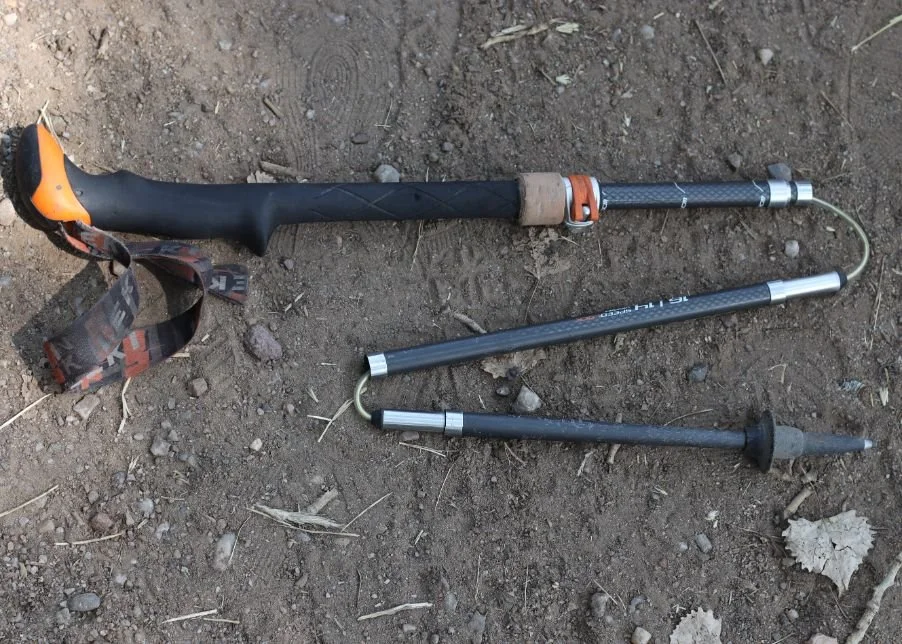
Folding or Z-style poles are a newer innovation that functions much like a tent pole. A tensioned internal cord holds the sections together, and they "snap" into place. These are immensely popular for lightweight trekking poles for trail running and for travelers who need to fit gear into a carry-on bag.
Pro Tip: If you plan to fly to your hiking destination, remember that the TSA generally requires trekking poles to be packed in checked luggage rather than carried on, regardless of how compact folding vs telescoping trekking poles for travel may be.
For the minimalist, the folding design offers unparalleled packability. When you reach a technical climbing section where you need your hands free, Z-poles can be stowed on the outside or even inside a small vest in seconds. However, they typically offer fewer height adjustment options and are generally slightly less robust than heavy-duty telescoping models.
Control & Comfort: Locking Mechanisms and Grips
Choosing trekking poles requires looking closely at the hardware that keeps the segments from collapsing under your weight. The reliability of trekking pole locking mechanisms is a safety issue, especially when you are putting your full weight on a pole to cross a roaring creek or navigate a muddy slope.
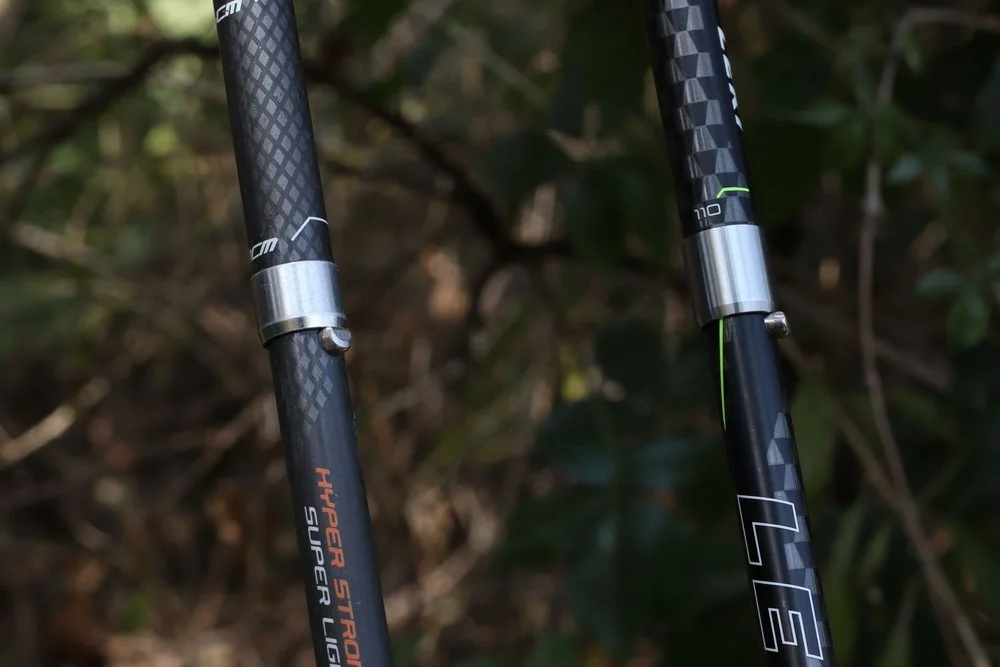
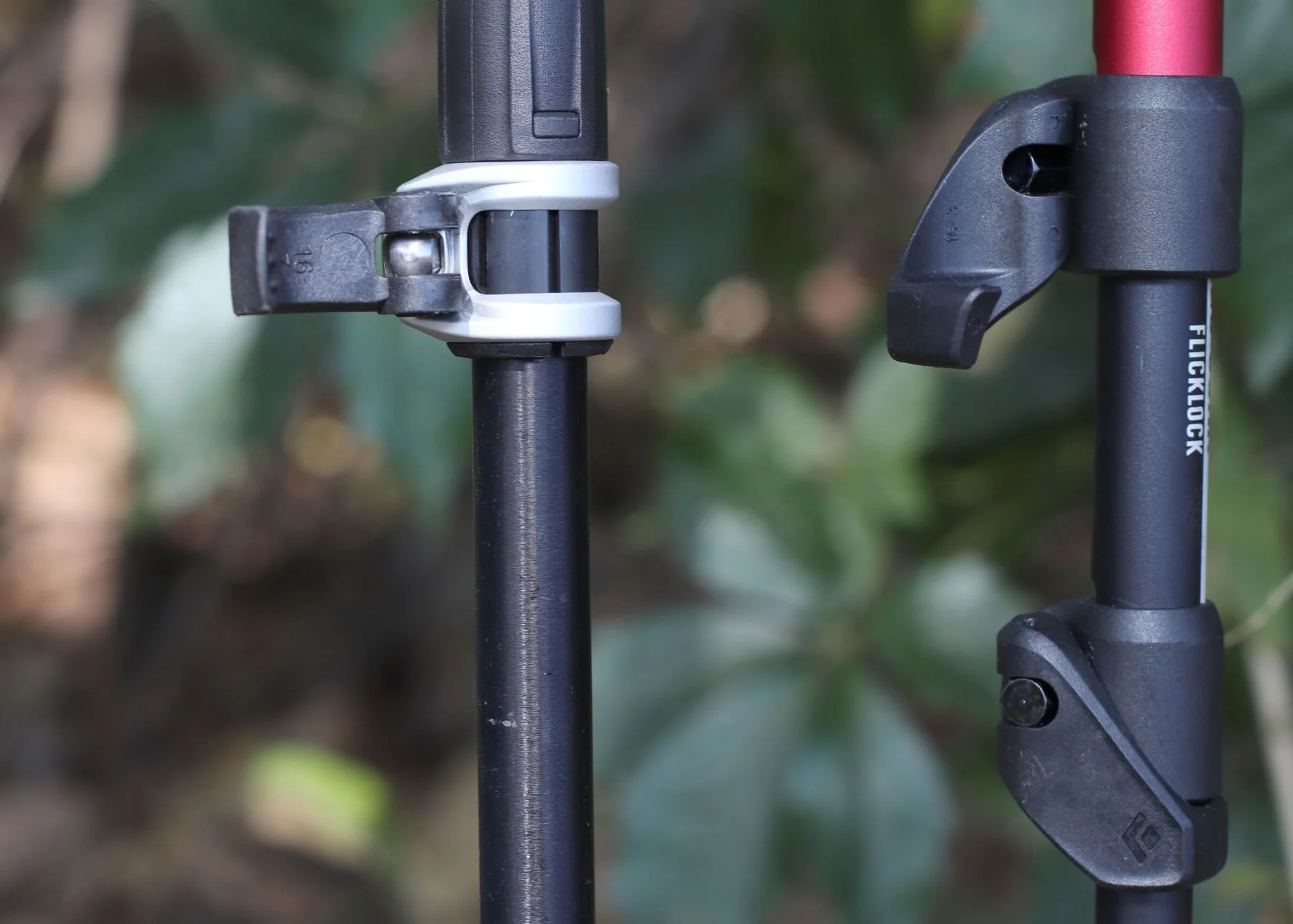
Historically, twist locks were common, relying on an internal expander. However, these are prone to slipping and can be nearly impossible to tighten with cold, wet hands. Today, most high-end poles use a lever lock or flick lock system. These external clamps provide a visual confirmation that the pole is secure and are much easier to manipulate while wearing gloves. Many modern systems even allow for tool-free tension adjustment in the field.
The interface between you and the pole is the grip. This is where comfort becomes paramount during a long day on the trail.
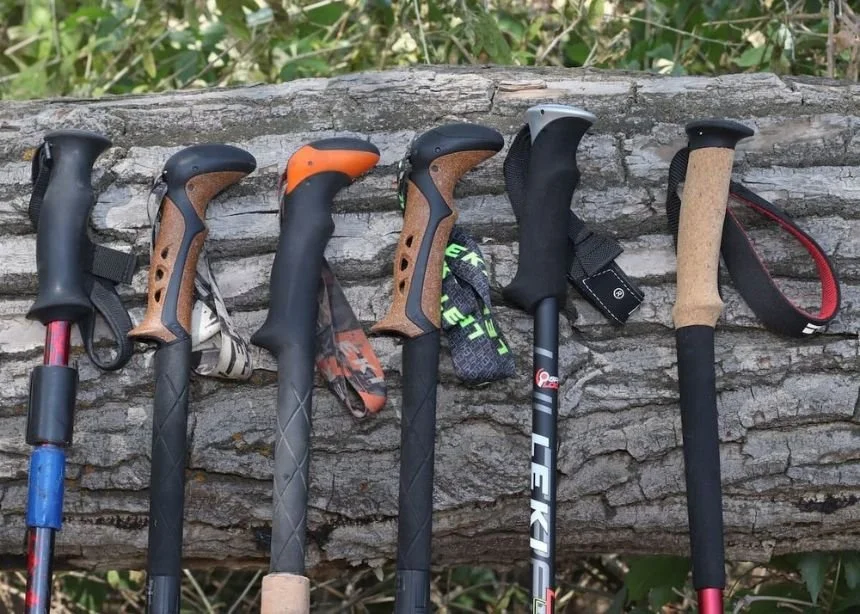
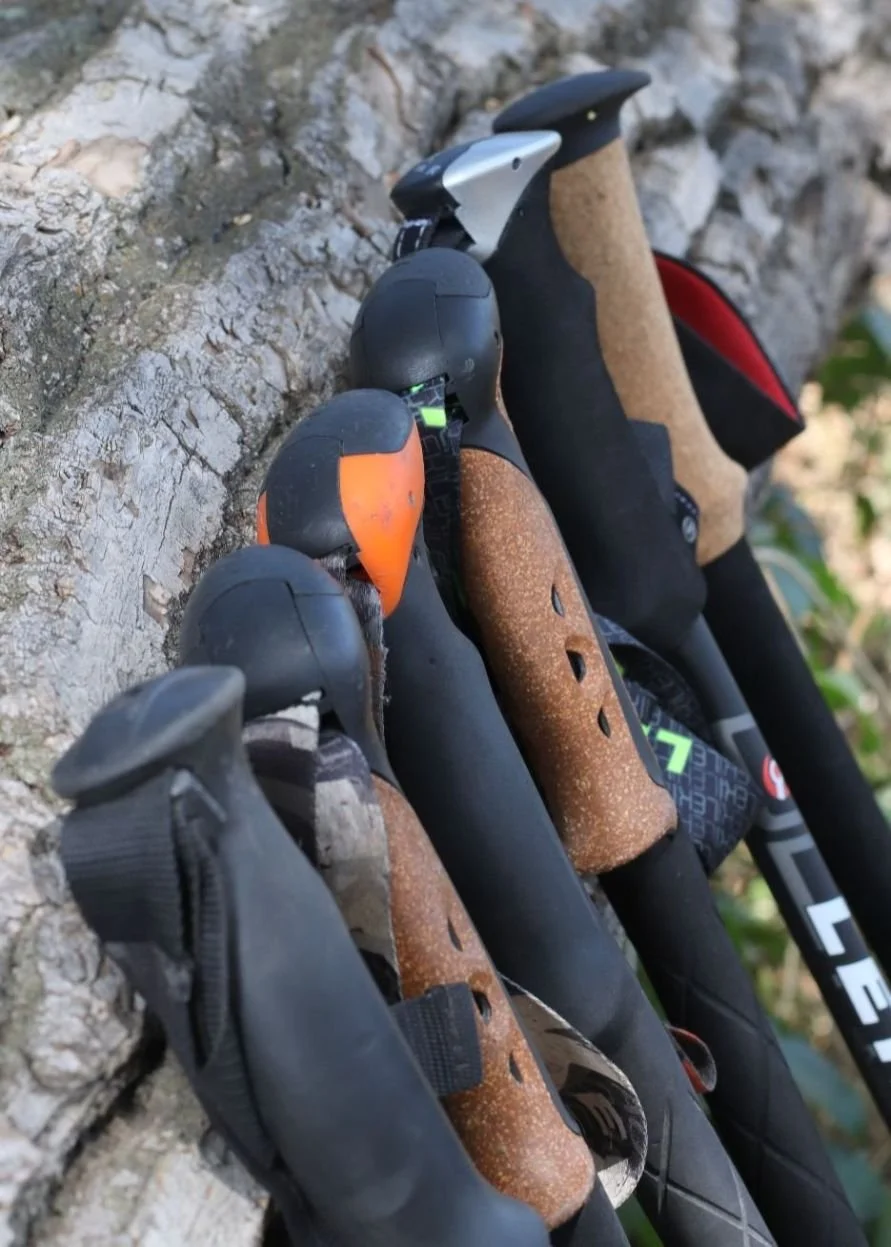
- Cork: This is a favorite for many veteran hikers. Cork is naturally antimicrobial and porous, which makes it excellent for wicking sweat in hot weather. Over time, a cork grip will actually mold to the shape of your hand, providing a semi-custom fit.
- EVA Foam: This material is incredibly soft and provides the lightest soft-touch feel. It is excellent for absorbing some of the shocks of the trail, though it can become slippery if it gets completely saturated with rain or sweat.
- Rubber: Best reserved for cold-weather activities like snowshoeing or mountaineering. Rubber doesn't wick moisture, but it provides excellent insulation and durability against the elements.
Ergonomic design in the handle—such as a slight forward tilt—can help keep your wrists in a neutral position, further increasing stability and reducing the risk of strain over long distances.
Finding Your Fit: Sizing and Terrain Adjustment
A pole that is the wrong height is at best inefficient and at worst a tripping hazard. The general rule of thumb for finding the correct length is the 90-degree elbow rule. Stand with your feet flat on the ground and hold the pole grips. Adjust the height until your elbow is bent at a right angle, with your forearm parallel to the floor.
Specific sizing considerations often come into play when adjusting trekking pole height for women or shorter hikers. Many manufacturers offer "womens-specific" versions, which usually feature shorter maximum lengths and smaller diameter grips to accommodate smaller hands. Don't be afraid to mix and match; the best pole is the one that feels balanced in your palm.
On the trail, your height adjustment shouldn't be static. When you are grinding up a long series of switchbacks, shortening your poles by 5-10 centimeters allows you to plant them firmly without overextending your shoulders. Conversely, on long descents, lengthening the poles gives you a "third and fourth leg" to lean on, significantly reducing the impact on your knees.
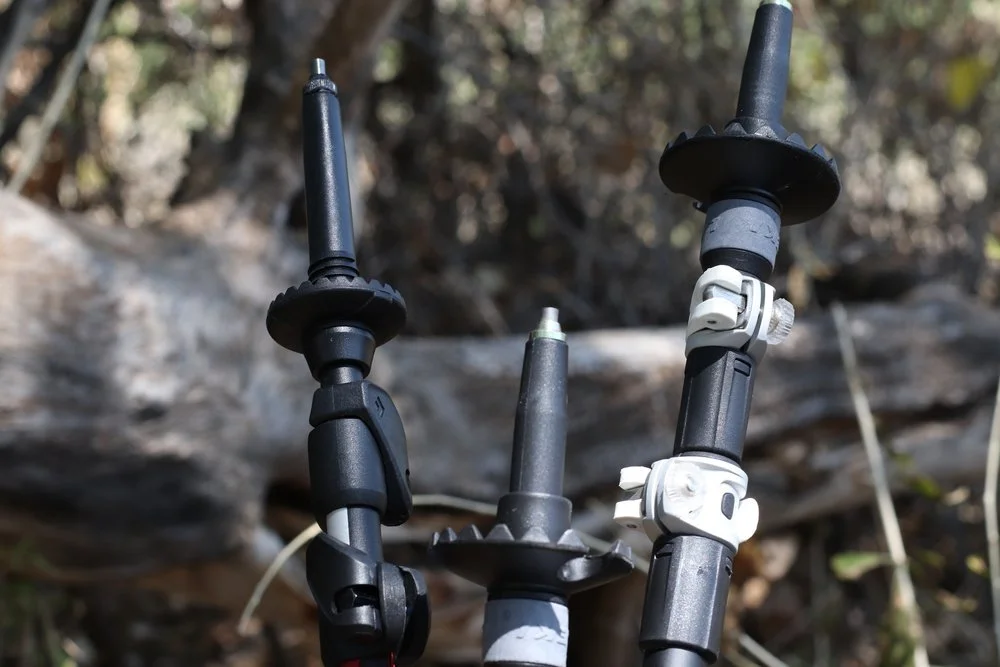
Don't forget the ground-level accessories. Most poles come with small mud baskets, but if you are heading into deep powder or soft sand, you will want larger snow baskets to prevent the poles from sinking. Rubber tips are another essential add-on for those who frequently hike on paved paths or sensitive rocky surfaces where metal tips might leave scars or make excessive noise.
FAQ
What should I look for when buying trekking poles?
Focus on the material (carbon vs. aluminum), the locking mechanism (lever vs. twist), and the grip material. Consider your primary activity—long thru-hiking demands lightness, while rugged mountaineering requires durability. Ensure the poles are height-adjustable or come in a size that fits the 90-degree elbow rule for your height.
Are carbon fiber or aluminum trekking poles better?
Neither is objectively better; it depends on your needs. Carbon fiber is the top choice for weight savings and stiffness, which is ideal for trail runners and ultralight backpackers. Aluminum is superior for those who prioritize durability and budget, as it is more likely to bend than snap under extreme stress in technical terrain.
How do I determine the right length for trekking poles?
The standard method is to adjust the pole so that your elbow forms a 90-degree angle when you are holding the grip and the tip is on the ground. For fixed-length poles, refer to manufacturer sizing charts. Remember to shorten the poles for uphill sections and lengthen them for descents to maintain proper ergonomics.
Do you really need two trekking poles or is one enough?
While a single staff can provide some balance, using two poles offers significantly better joint impact protection and stability. Two poles engage the upper body more effectively, creating a rhythmic four-point gait that maximizes speed and safety on uneven ground.
Is it worth getting trekking poles with anti-shock features?
Anti-shock features consist of internal springs that dampen the impact when the pole hits the ground. This is often worth it for hikers with existing wrist or elbow injuries. However, these systems add weight and complexity, and many modern carbon poles offer enough natural vibration dampening that a mechanical shock system may be unnecessary.