Quick Facts
- The 25-Pound Rule: This is the critical threshold for comfort. If your total pack weight regularly exceeds 25 pounds, a framed ultralight backpack is essential to prevent shoulder strain and fatigue.
- Volume Standards: Most thru-hikers find that a 40L to 50L internal volume is the sweet spot for a well-dialed kit, while 60L is better for long resupply cycles or winter gear.
- Material Resilience: Modern fabrics like Ultra 200/400 and Dyneema Composite Fabric (DCF) offer the best weight-to-strong ratio, providing inherent water resistance compared to traditional nylon.
- Base Weight Priority: You should only transition to a frameless pack if your base weight—the weight of your gear excluding food, water, and fuel—is consistently under 12 pounds.
- Weight Distribution: Framed packs utilize internal stays or hoops to transfer roughly 80% of the weight to your hips, whereas frameless packs rely on strategic packing to maintain structure.
- Top Recommendations: The Gossamer Gear Mariposa 60 leads for comfort, while the Hyperlite Mountain Gear Unbound 40 is a gold standard for durability on technical trails.
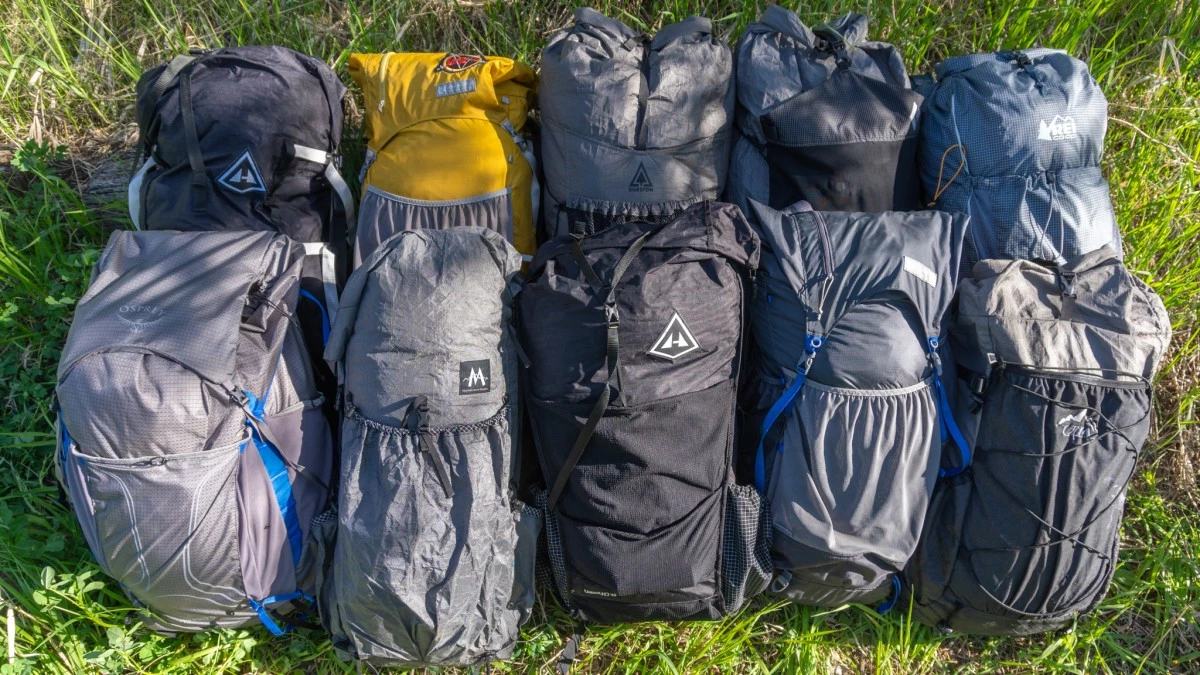
Choosing the best ultralight backpack is the final step in perfecting your thru-hiking kit. Whether you are tackling the AT or the PCT, understanding weight limits and material durability is key to ensuring your gear supports your goals rather than hindering your progress. To choose the best ultralight backpack for thru-hiking, consider your total base weight and expected load. Internal frame packs like the Gossamer Gear Mariposa 60 are ideal for managing heavier resupply loads and carrying bear canisters comfortably. For those prioritizing water resistance and durability over long distances, Dyneema or Ultra fabric packs like the Hyperlite Mountain Gear Unbound 40 are top choices, while experts pursuing the lightest kits may prefer frameless designs.
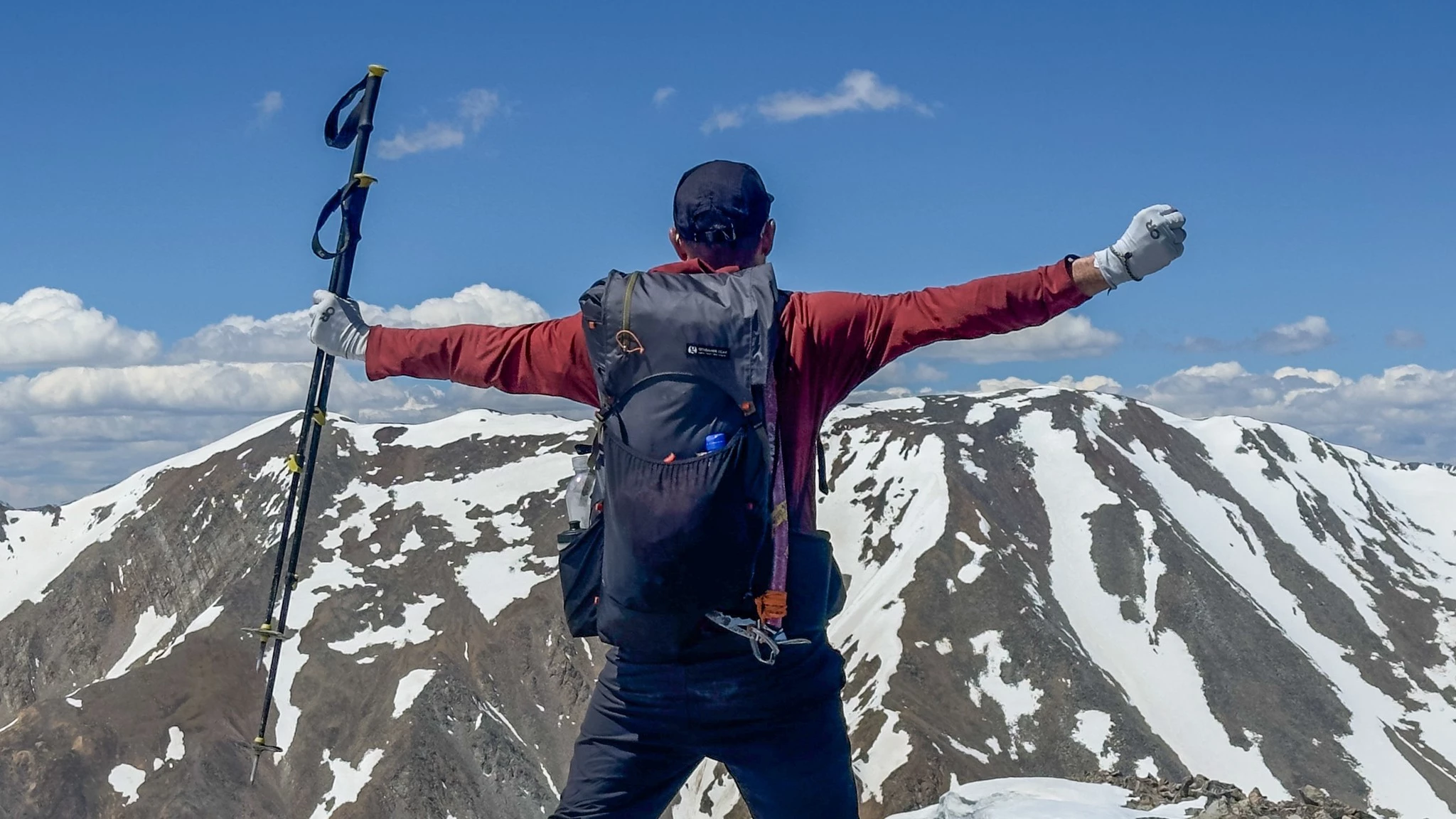
The 25-Pound Rule: Framed vs Frameless Ultralight Packs
One of the most common mistakes we see on the trail is a hiker choosing a pack based on its empty weight rather than its load-carrying capacity. In the world of long-distance trekking, the decision between framed vs frameless ultralight packs is less about the weight of the bag itself and more about the physics of weight-transfer efficiency. A frame serves a singular, vital purpose: it creates a rigid structure that moves the weight of your gear from your shoulders onto your iliac crest—your hip bones.
When a pack lacks a frame, it is essentially a sack with shoulder straps. If you load 30 pounds into a frameless pack, you will likely experience what we call torso collapse. This happens when the soft fabric of the bag bunches under the load, causing the pack to sag and putting 100% of the strain on your trapezius muscles. Biomechanical research indicates that carrying a backpack weighing more than 30% of a person's total body weight can lead to significant balance issues and postural strain after just 22 minutes of activity. For most hikers, that 30% threshold is surprisingly easy to hit when you add five days of food and two liters of water.
The 25-pound benchmark is our recommended line in the sand. If your total weight—everything including your food and water—is under 20 pounds, a frameless pack feels like a liberating extension of your body. Between 20 and 25 pounds, a frameless pack is manageable but requires strategic packing (often using a folded foam sleeping pad as a virtual frame). Once you cross that 25-pound mark, particularly during long resupply cycles, the internal hoop stay or carbon fiber stays found in a framed ultralight backpack become worth every extra ounce they add to the kit.
Beyond the frame itself, look for load lifters. These are the small adjustable straps located above the shoulders that pull the top of the pack closer to your back. In a framed system, they help dial in the fit and shift weight toward the center of gravity, preventing the bag from pulling you backward on steep inclines.
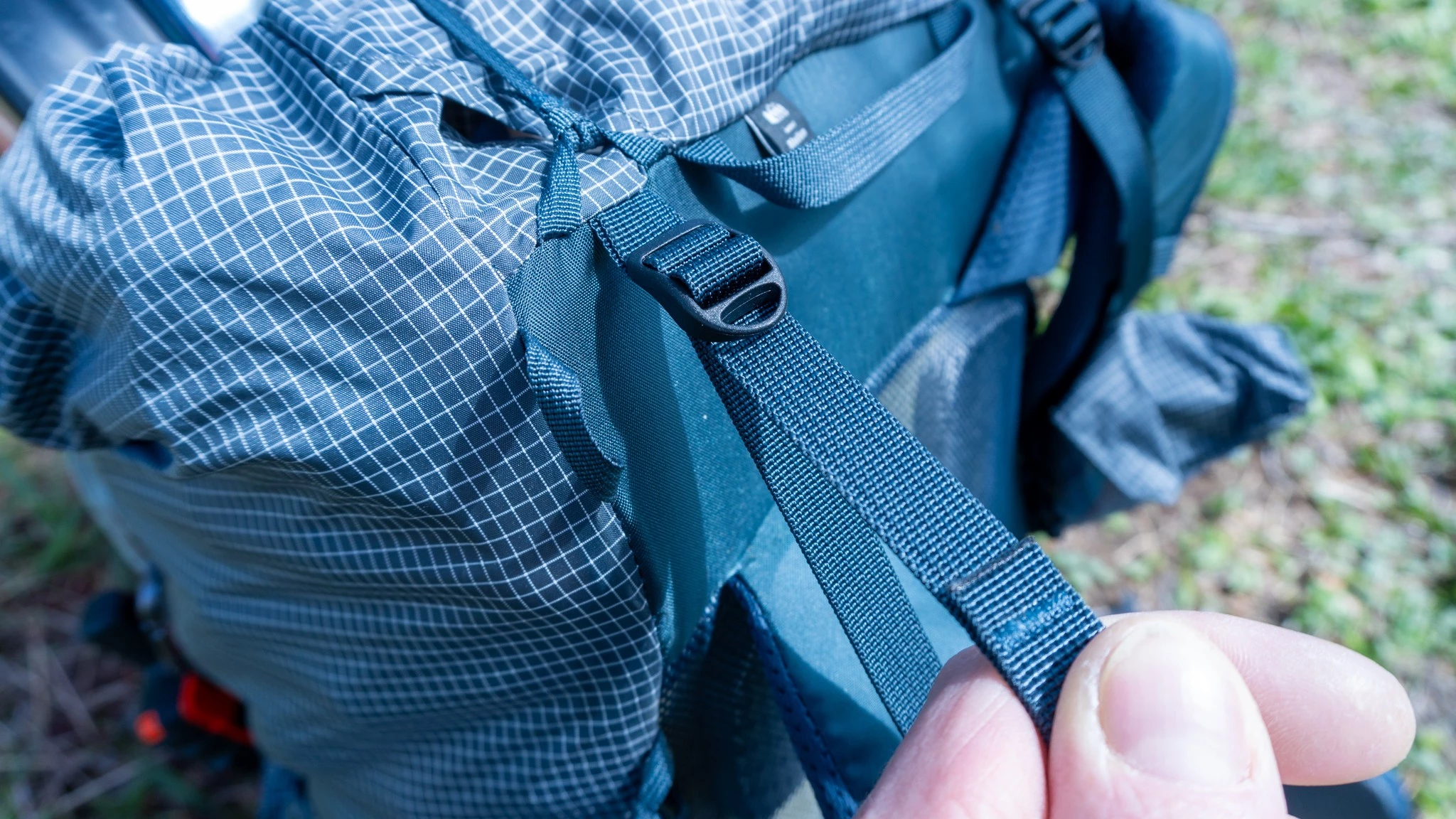

Material Science: Ultralight Backpack Material Comparison (Dyneema vs Ultra)
The evolution of the ultralight backpack has been driven almost entirely by advancements in material science. Ten years ago, the only way to get a light pack was to use thin silnylon that would tear on a stray branch. Today, we have access to fabrics that are lighter than paper but stronger than steel by weight. When performing an ultralight backpack material comparison, you are generally choosing between three categories: UHMWPE gridstop, Dyneema Composite Fabric (DCF), and the new industry darling, Ultra.
Traditional UHMWPE gridstop (often called Robic nylon) remains a popular, cost-effective alternative that balances durability with a lower price point. It is soft to the touch and handles abrasion well, but it isn't waterproof and will absorb water weight during a downpour. On the higher end, DCH fabric technology (Dyneema Composite Hybrid) has been the standard for years. It is essentially a layer of Dyneema fiber laminated to a polyester face fabric. It is highly water-resistant and does not stretch, meaning your pack holds its shape even when wet.
However, the current peak of material technology is Ultraweave (Ultra). While Dyneema uses a laminate construction, Ultra fabrics weave UHMWPE fibers directly into the face, resulting in vastly superior abrasion resistance. For a thru-hiker navigating the granite scrambles of the High Sierra or the overgrown brush of the PCT, the increased durability of Ultra is often worth the premium. Most of these high-tech packs feature a roll-top closure, which not only provides a better weather seal but also allows the pack to compress as you eat through your food supply.
| Fabric Type | Weight (oz/sq yd) | Water Resistance | Abrasion Resistance | Typical Application |
|---|---|---|---|---|
| Ultra 200 | 3.5 oz | High (Laminate) | Excellent | High-end thru-hiking |
| DCF (DCH50) | 3.5 oz | High (Laminate) | Good | Weight-conscious kits |
| Robic Nylon | 4.2 oz | Moderate (DWR) | Moderate | Budget-friendly/Comfort |
| Ultra 400 | 4.6 oz | High (Laminate) | Maximum | High-wear areas (bottoms) |
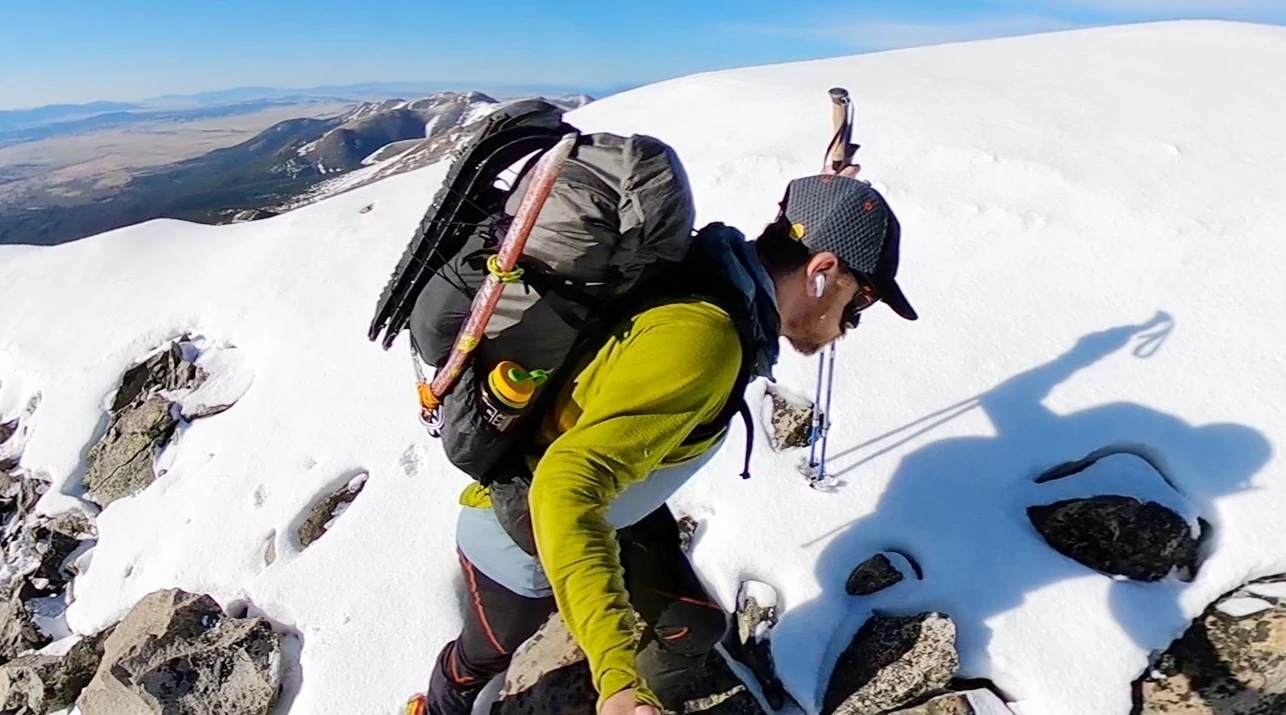
Sizing and Volume: Choosing Between 40L and 60L Ultralight Packs
One of the most difficult decisions in any thru-hiking backpack guide is choosing the right volume. We often see hikers buy a 60L pack "just in case," only to fill that extra space with unnecessary gear that adds weight. Conversely, buying a pack that is too small leads to gear being strapped to the outside, which throws off your balance and exposes your equipment to the elements.
When choosing between 40L and 60L ultralight packs, you must look at your longest expected stretch between towns. For most of the Appalachian Trail, where towns are frequent, a 40L to 45L pack is more than sufficient. However, for the PCT or CDT, where you may need to carry seven days of food plus a bulky bear canister, a 55L to 60L pack is often the safer bet.
Another critical factor is fitting bear canisters in ultralight backpacks. Many ultralight packs are quite narrow to keep the weight centered. If you are using a standard BearVault BV500, you need to check if it will fit horizontally inside the pack. Carrying a canister vertically often leaves "dead space" around it that is hard to pack efficiently. If you plan on hiking in the Sierra Nevada or the Adirondacks, ensure your chosen pack’s circumference can accommodate your specific canister model without over-stressing the seams.

Best Ultralight Backpack Picks by Hiker Archetype
Every hiker has different priorities. According to the Appalachian Trail Conservancy, the average starting pack weight for thru-hikers was 31.22 pounds in 2024, which typically includes first-stretch food and water. This average suggests that most hikers are better served by a framed pack rather than a minimalist frameless one. Interestingly, a survey of 2024 thru-hikers found that 71% of participants kept the same backpack for the entire duration of their journey, proving that if you choose correctly at the start, your gear can go the distance.
The Comfort Seeker If you want the transition to ultralight to be as painless as possible, look at the Gossamer Gear Mariposa 60. It features one of the most comfortable harness systems in the industry and a signature sit-pad backpanel. It uses internal hoop stay technology to handle loads up to 35 pounds effortlessly. Its numerous external pockets make organization simple, which is why it remains a perennial favorite on the trail.
The Durability Specialist For those who want a pack that can survive more than one thru-hike, the Hyperlite Mountain Gear Unbound 40 is a top choice. Built with high-grade technical laminates and featuring a streamlined design, it is nearly waterproof and incredibly tough. It is designed specifically for the needs of a long-distance hiker, with a large "stretchy" bottom pocket for storing snacks or trash on the go.
The Budget Conscious You don't need to spend $400 to get a great pack. The Granite Gear Crown3 60 is an excellent best budget ultralight backpacks for thru-hiking contender. It offers a removable frame sheet and a highly adjustable hip belt, making it one of the few ultralight options that caters well to various torso sizes and body shapes.

FAQ
What weight is considered an ultralight backpack?
Generally, a pack is considered ultralight if it weighs less than 2 pounds (32 ounces). However, many elite minimalist packs weigh as little as 12 to 16 ounces. The goal is to find a weight that doesn't compromise the comfort of your carry.
Are ultralight backpacks durable enough for long hikes?
Yes, modern ultralight packs are designed specifically for the rigors of 2,000-plus mile journeys. While they require slightly more care than a heavy heavy-duty canvas pack, materials like Ultra weave and Dyneema are specifically engineered to withstand thousands of miles of abrasion.
Do ultralight backpacks have internal frames?
Some do, and some don't. Framed ultralight models use lightweight aluminum or carbon fiber stays to transfer weight. Frameless models omit these to save weight but are only recommended for those with a very low base weight.
How do I choose the right size ultralight backpack?
Size is determined by two factors: your torso height and the volume of your gear. You should measure your torso from the C7 vertebra to the iliac crest to ensure the hip belt sits correctly. For volume, a 40L to 55L pack is standard for most thru-hikers.
What features should I look for in an ultralight hiking pack?
Look for a large external mesh pocket for drying wet gear, accessible side pockets for water bottles that you can reach while walking, and a comfortable hip belt. Features like a roll-top closure and water-resistant materials are also highly beneficial for long-distance travel.