Quick Facts
- Top Performer: The Arc'teryx Atom Hoody takes the title of best overall jacket for its mix of warmth, mobility, and air-permeable side panels.
- Warmth when Wet: Synthetic fills retain 80-90% of their insulating properties when damp, compared to untreated down which can lose 90% of its warmth.
- Market Growth: The women's outdoor apparel sector is seeing a compound annual growth rate of approximately 6.55% as technical gear integrates better sustainability.
- Insulation Choice: For static warmth in extreme cold, look for high-loft options like PrimaLoft Gold Eco; for aerobic activities, choose breathable Coreloft Compact or PlumaFill.
- Sustainability Focus: In 2026, most top-tier synthetic jackets utilize recycled content and PFC-free DWR finishes to reduce environmental impact.
- Best Specialized Option: The Patagonia DAS Parka remains the warmest synthetic insulated belay parka for women looking for maximum thermal protection.
Our Top Picks
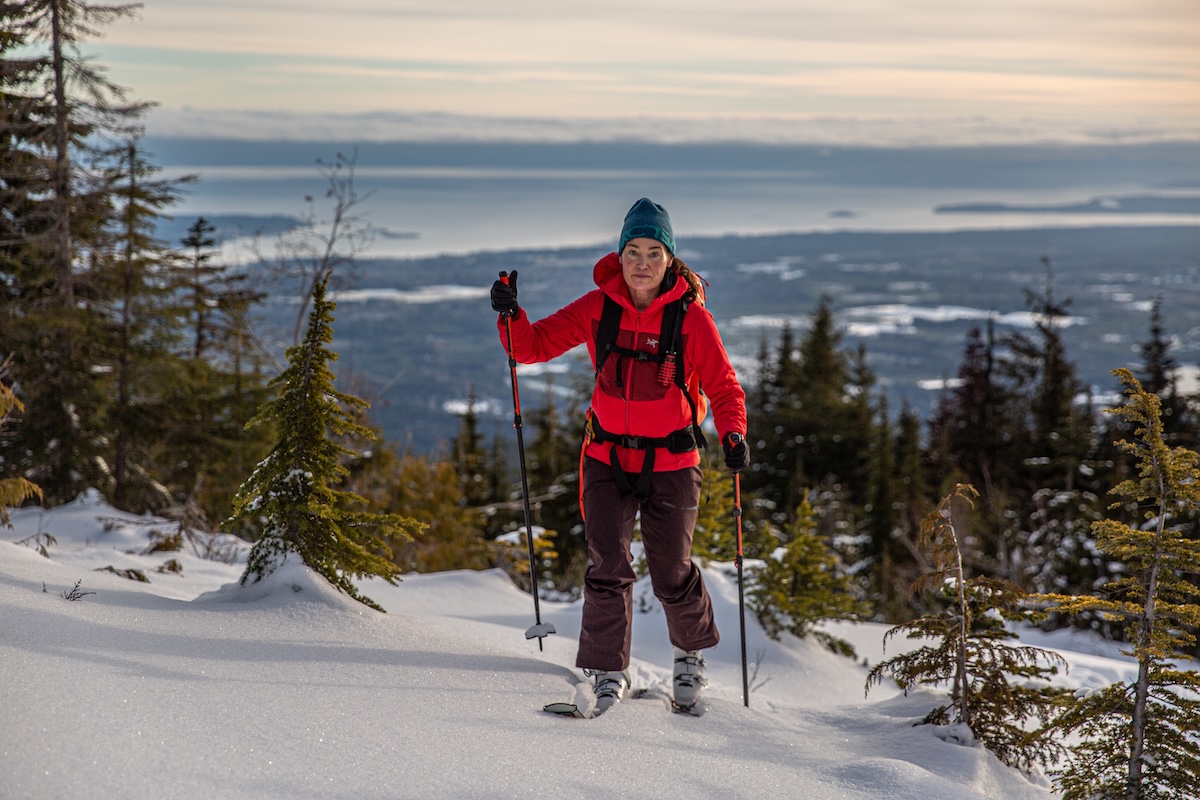
- Best Overall: Arc'teryx Atom Hoody – A flawless balance of weight, temperature regulation, and comfort for almost any mountain activity.
- Best for High Output: Outdoor Research Deviator – Optimized for breathability and moisture-wicking during intense vertical pursuits.
- Best for Severe Cold: Patagonia DAS Parka – Exceptional static warmth designed for high-altitude environments and freezing belay stations.
- Best for Damp Climates: Rab Cirrus Alpine – Loose-fill recycled insulation that mimics down loft while staying resilient in heavy humidity.
The Arc'teryx Atom Hoody is the best overall synthetic jacket for women due to its versatile balance of warmth, comfort, and mobility. It features Coreloft Compact insulation and breathable stretch-fleece side panels, making it suitable for both technical backcountry use and casual wear. While it is not a specialized piece for extreme speed or severe weather, its premium build and reliable temperature regulation make it a standout choice for most outdoor activities.
| Model Name | Weight | Insulation Type | Best Use |
|---|---|---|---|
| Arc'teryx Atom Hoody | 11.6 oz | Coreloft Compact | Versatile Mid-layer |
| Outdoor Research Deviator | 12.5 oz | VerticalX Octa | High-Output Climbing |
| Patagonia DAS Parka | 19.6 oz | PrimaLoft Gold Eco | Alpine Belays |
| Rab Cirrus Alpine | 16.1 oz | Cirrus (Recycled) | Moisture-Heavy Hiking |
| Patagonia Micro Puff | 8.3 oz | PlumaFill | Lightweight Backpacking |
Why Synthetic Insulation is Essential for 2026
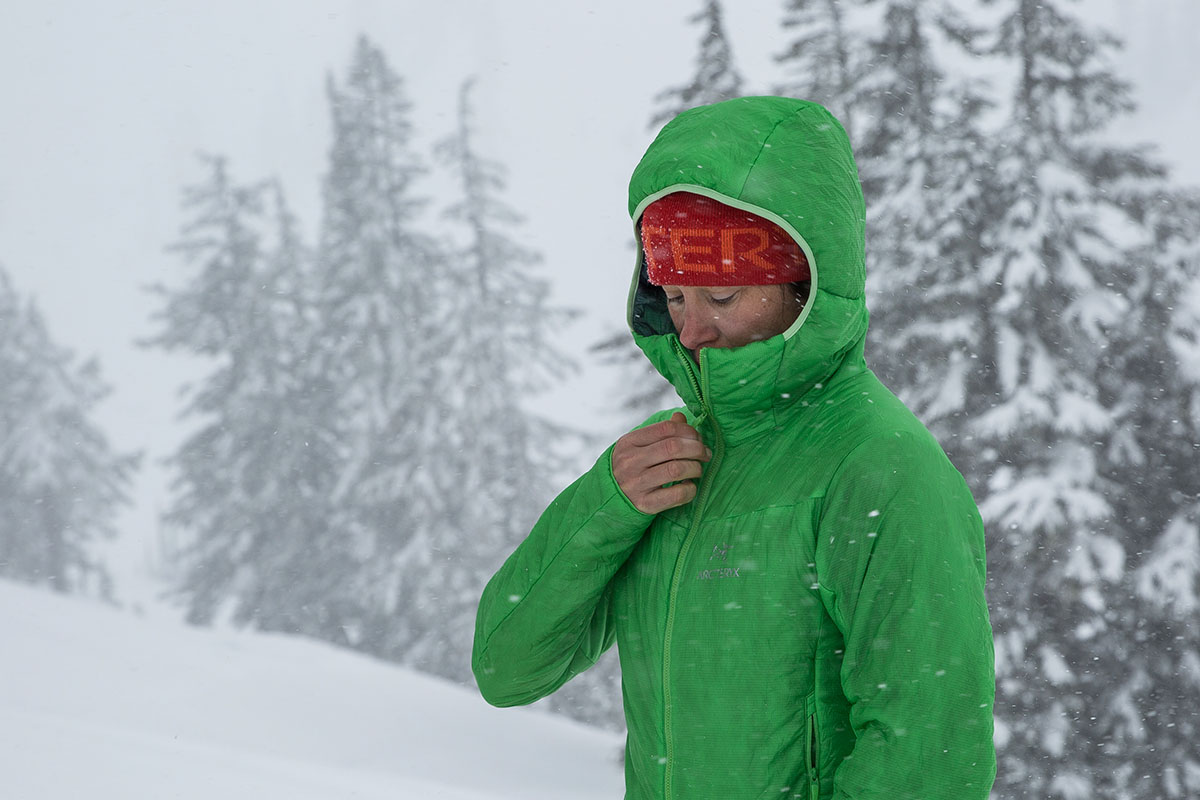
For decades, the debate of synthetic vs down jackets for women was defined by a simple trade-off: weight versus weather resistance. In 2026, the gap in weight has narrowed significantly, but the performance gap in wet conditions remains massive. Unlike natural down, which clumps and collapses when saturated, synthetic materials are designed to stay lofted.
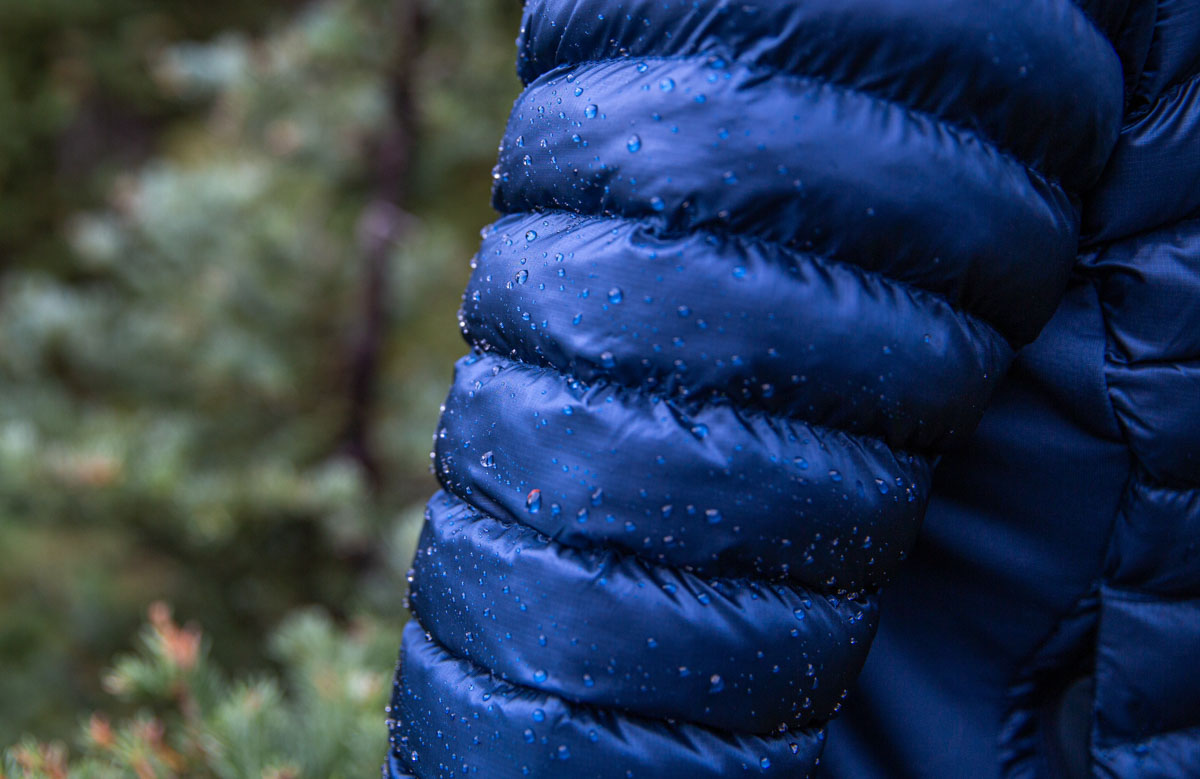
While traditional untreated down can lose up to 90% of its insulating capacity when saturated, synthetic insulation is typically designed to retain approximately 80% to 90% of its warmth in wet conditions. This makes these layers not just a preference, but a safety requirement for expeditions in the Pacific Northwest, the damp peaks of the UK, or early spring in the Rockies.
The market reflects this shift toward reliability. Synthetic materials accounted for approximately 63% of the global outdoor apparel market in 2024, largely due to their quick-drying properties and moisture-wicking capabilities. Furthermore, the women’s outdoor apparel segment is projected to expand at a compound annual growth rate of approximately 6.55% between 2026 and 2031. We are seeing a move away from PFAS-laden coatings toward more durable, PFC-free DWR finish applications and the widespread use of recycled content.
Technical Term: g/m² This stands for grams per square meter. It measures the weight and thickness of the insulation fill. A 60g/m² jacket is usually a mid-layer, while 100g/m² or higher is aimed at standalone warmth and winter conditions.
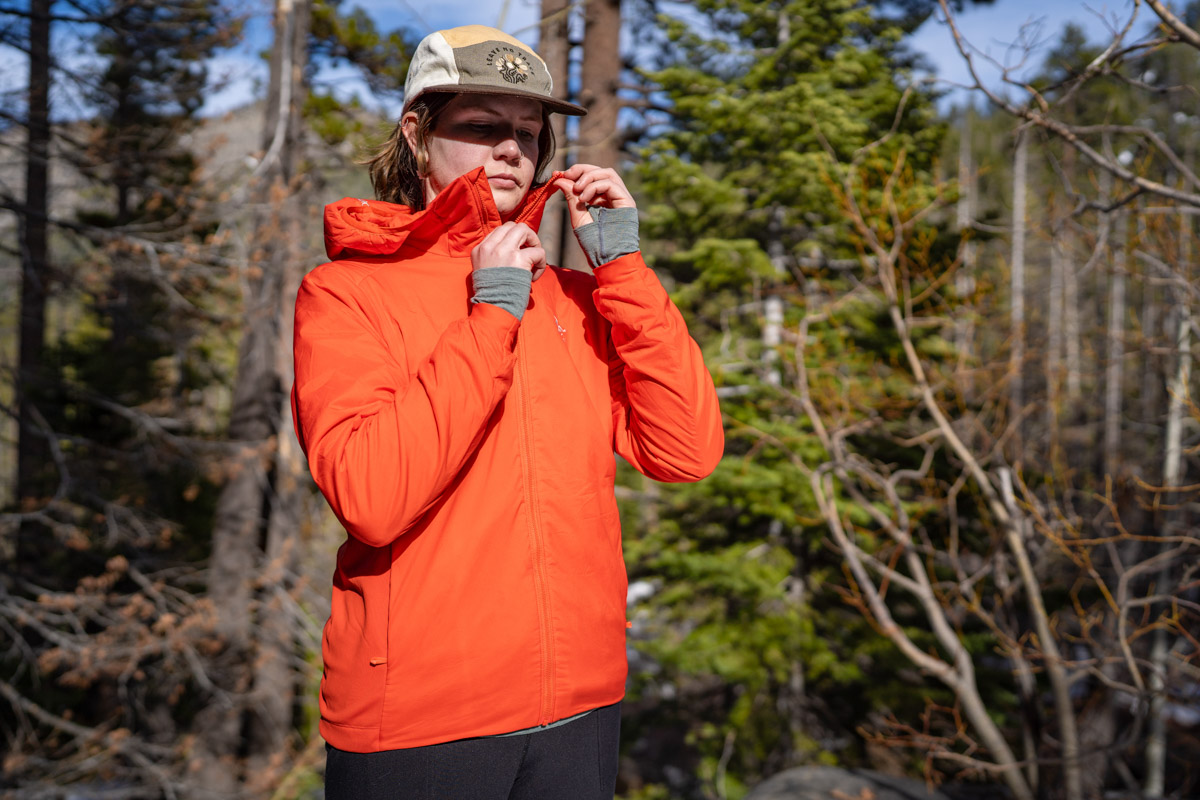
Best Overall: Arc'teryx Atom Hoody
The Arc'teryx Atom Hoody has maintained its position at the top of the best women's synthetic jackets list for another year because it simply does everything well. It isn't the lightest or the absolutely warmest, but its ability to bridge the gap between technical mountaineering and daily lifestyle wear is unmatched.
Specs Box
- Total Weight: 11.6 oz
- Fill Weight: 60 g/m²
- Insulation: Coreloft Compact
- Shell Denier: 20D Tyono
The magic lies in the air-permeable materials located on the side panels. These fleece sections allow for active temperature regulation, dumping excess heat during an uphill hike while the Coreloft Compact cores keep your torso warm against the wind. The 20-denier shell is surprisingly tough and treated with a high-performance DWR finish that sheds light rain effortlessly.
Pros
- Exceptional comfort and "second skin" fit.
- Breathable side panels prevent overheating during movement.
- High-quality hood design fits perfectly over a climbing helmet.
Cons
- Not warm enough for static activities in sub-freezing temperatures.
- Side panels can allow wind to penetrate in very gusty conditions.
Best for High-Output Activities: Outdoor Research Deviator
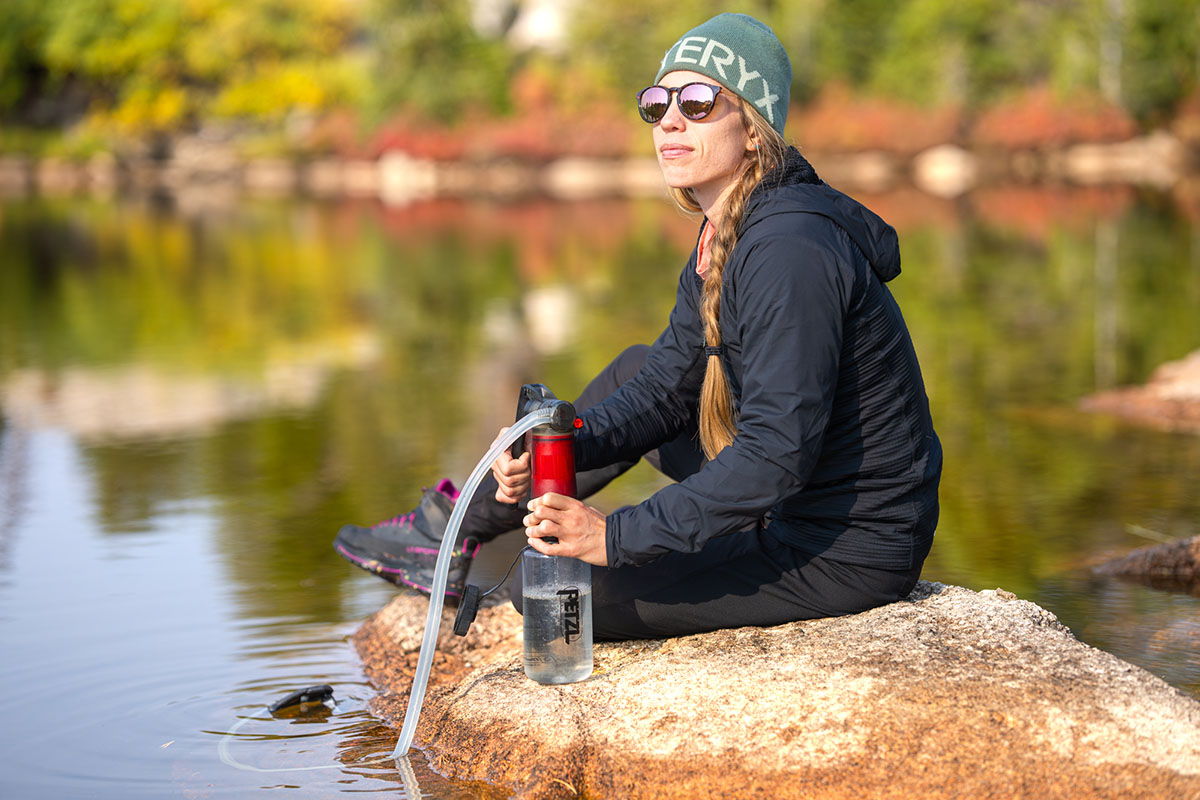
When your heart rate is redlining during a steep skin track or a fast alpine scramble, most water-resistant insulated jackets for women become sweat-traps. The Outdoor Research Deviator is specifically engineered to solve this through advanced body-mapping technology.
Specs Box
- Total Weight: 12.5 oz
- Fill Weight: Hybrid (VerticalX Octa)
- Insulation: VerticalX Octa / Polyester knit
- Shell Denier: 20D stretch woven
This is arguably the top performer among women's active insulated jackets for 2026. The Deviator uses VerticalX Octa insulation on the front panels, providing warmth where you face the wind, while the back and underarms use highly breathable, moisture-wicking fabrics. This ensures you stay dry from the inside out. It is the best women's synthetic jackets for high-output activities where stopping to change layers isn't an option.
Pros
- State-of-the-art breathability for high exertion.
- Lightweight and moves with the body perfectly during technical moves.
- Excellent thumb loops and pocket placement for climbers.
Cons
- Very little insulation on the back, making it cold if you aren't wearing a pack.
- Not intended for use as a standalone warmth layer in camp.
Best for Severe Cold: Patagonia DAS Parka
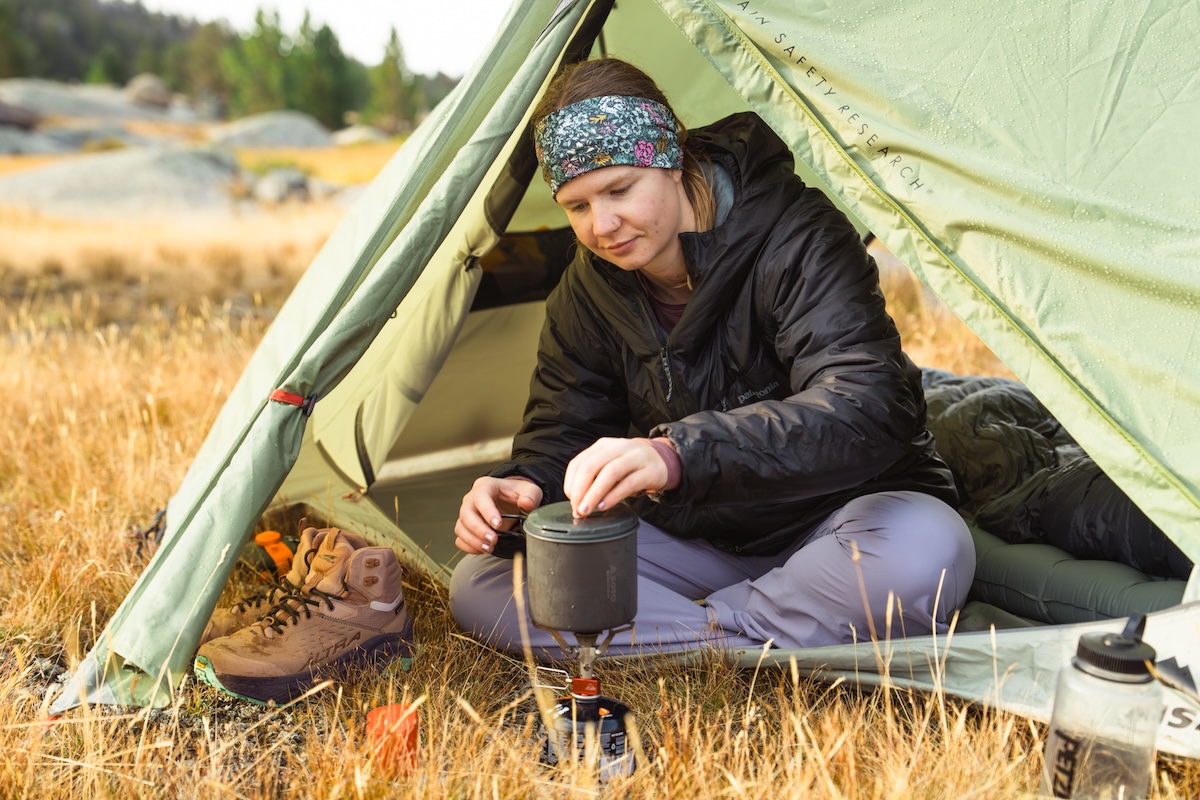
When the weather turns hostile and you find yourself standing at a frozen belay in the Adirondacks, you need the warmest synthetic insulated belay parka for women. The Patagonia DAS (Dead Air Space) Parka is built for these exact "oh no" moments.
Specs Box
- Total Weight: 19.6 oz
- Fill Weight: 133 g/m²
- Insulation: PrimaLoft Gold Eco
- Shell Denier: 10D Pertex Quantum Pro (with PU coating)
The DAS Parka utilized PrimaLoft Gold Eco insulation, which offers the best thermal efficiency of any synthetic fill on the market. The shell durability is enhanced by a water-resistant PU coating, making it virtually windproof and highly resistant to snow melt. This is durable women's synthetic jackets for alpine rock climbing where the jacket will inevitably be scraped against granite and ice.
Pros
- Incredible warmth-to-weight ratio for a synthetic parka.
- Oversized fit allows it to be thrown over all other layers.
- High shell durability despite the lightweight fabric feel.
Cons
- Very bulky; takes up significant room in a pack.
- Too warm for any activity above a slow walk in deep cold.
Best for Hiking in Damp Climates: Rab Cirrus Alpine
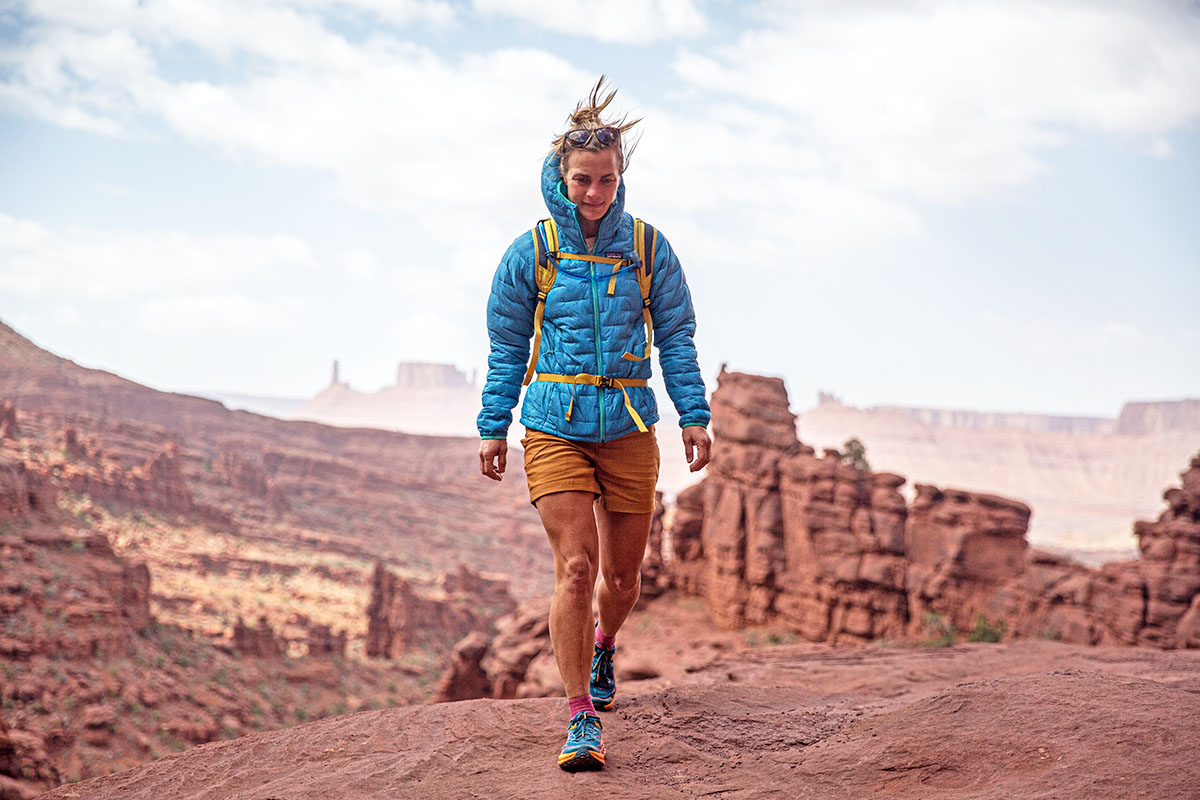
If you are looking for water-resistant synthetic hiking jackets for damp climates that look and feel like a puffy down jacket, the Rab Cirrus Alpine is our recommendation for 2026.
Specs Box
- Total Weight: 16.1 oz
- Fill Weight: 100% Recycled Cirrus HL
- Insulation: Cirrus HL (Loose fill)
- Shell Denier: 30D Pertex Quantum
Rab has mastered the use of loose-fill recycled content that mimics the structure of down feathers. Unlike the sheet insulation used in the Atom, Cirrus HL creates high-loft pockets of air. This makes it an ideal choice for hikers who want the classic puffy aesthetic but need the moisture-resilience of synthetic fibers. It’s perfect for the soggy, misty mornings common in coastal ranges.
Pros
- Recycled materials used in both shell and insulation.
- Mimics the loft and "cozy" feel of a down jacket.
- Water-resistant shell handles light rain and heavy mist brilliantly.
Cons
- Heavier and less packable than the Patagonia Micro Puff.
- Loose fill can shift over time if not dried properly.
Tested & Dismissed: Why Some Staples Didn't Make the Cut
In our 2026 testing cycle, several popular models fell short of the top 11. Most notably, the "Standard Budget Alternative" from a major big-box retailer was dismissed due to a failing DWR finish after only three heavy rain exposures. More importantly, we excluded a very popular ultralight model because its shell durability was so poor that it punctured during a standard bush-whacking test.
Another high-end model was cut because its temperature regulation was non-existent; the face fabric was so calendered (sealed for down-proofing) that it trapped all moisture inside, leading to a "garbage bag" feel during moderate hiking. When we evaluate the best women's synthetic jackets, we prioritize the balance of breathability and protection. If a jacket can't handle a basic incline without soaking the wearer in sweat, it doesn't belong in a technical review.
How We Tested: The Wet Weather Protocol
Our team spent 14 weeks testing these jackets across the damp environments of the Pacific Northwest and the humid Appalachian trail. We focused specifically on synthetic vs down jackets for wet weather performance by wearing one of each in tandem during rainy ascents.
We used a combination of field use and controlled "soak tests." We measured the time it took for various moisture-wicking fabrics to dry at room temperature after being saturated to 50% capacity. We also checked for "cold spots" in jackets with quilted patterns, looking for where the insulation might settle when wet.
Technical Term: Denier (D) Denier measures the thickness of the individual threads in a fabric. A 10D shell is incredibly light and packable but fragile, while a 40D shell is rugged and abrasion-resistant.
FAQ
Is synthetic insulation better than down?
Whether synthetic is better depends entirely on the environment. Synthetic insulation is superior in wet, humid, or high-output conditions because it retains its loft and continues to insulate when damp. However, down still offers a better warmth-to-weight ratio and is much more packable for dry, ultralight missions. In 2026, many professionals have moved toward synthetic for everything except extreme high-altitude dry cold.
Does synthetic insulation stay warm when wet?
Yes, most high-quality synthetic fills retain about 80% to 90% of their heat-trapping ability when wet. This is because the polyester fibers are non-absorbent and maintain their physical structure (loft) even when the spaces between them are filled with water. In contrast, down feathers collapse into a sodden clump, losing almost all air-trapping capability.
What is the warmest synthetic insulation?
For 2026, PrimaLoft Gold Eco is widely considered the warmest synthetic insulation per ounce of weight. It is designed to mimic the thermal efficiency of 500-550 fill-power down while remaining completely water-resistant. You will typically find this in heavy-duty belay parkas like the Patagonia DAS Parka.
How do I choose between different synthetic fills?
Choose your fill based on your activity level. Sheet insulation (like Coreloft) is durable and stays in place, making it great for all-around use. Loose-fill insulation (like Cirrus or PlumaFill) mimics down and is best for lightweight packability and casual comfort. For high-sweat activities, look for "active insulation" which is specifically designed with a more open structure to allow air and moisture to escape.
Is synthetic insulation environmentally friendly?
Modern synthetic insulation has made massive strides in sustainability. Most major brands now use 50% to 100% recycled content derived from post-consumer plastic bottles. Furthermore, the industry has transitioned toward PFC-free water repellents, which eliminate "forever chemicals" from the manufacturing process. While down is a natural byproduct, the synthetic industry is leading the charge in circular manufacturing and recycled textiles.
Conclusion & Recommendation
Choosing from the best women's synthetic jackets comes down to identifying your primary use case. If you need a single jacket to take you from a morning coffee run to a technical summit attempt, the Arc'teryx Atom remains the gold standard. For those who prioritize moving fast and light, the Patagonia Micro Puff offers the best lightweight packable synthetic jackets for women, providing impressive warmth for its minimal weight.
For extreme conditions where moisture is a constant threat, don't compromise on your insulation. A high-quality synthetic layer is a piece of gear that has your back when the weather turns, ensuring you stay warm, safe, and comfortable enough to enjoy the trail.